Your Trusted Legal Partner in Sydney

Visa Cancelled at the Airport? The Ultimate Legal Guide to Defeating Border Force

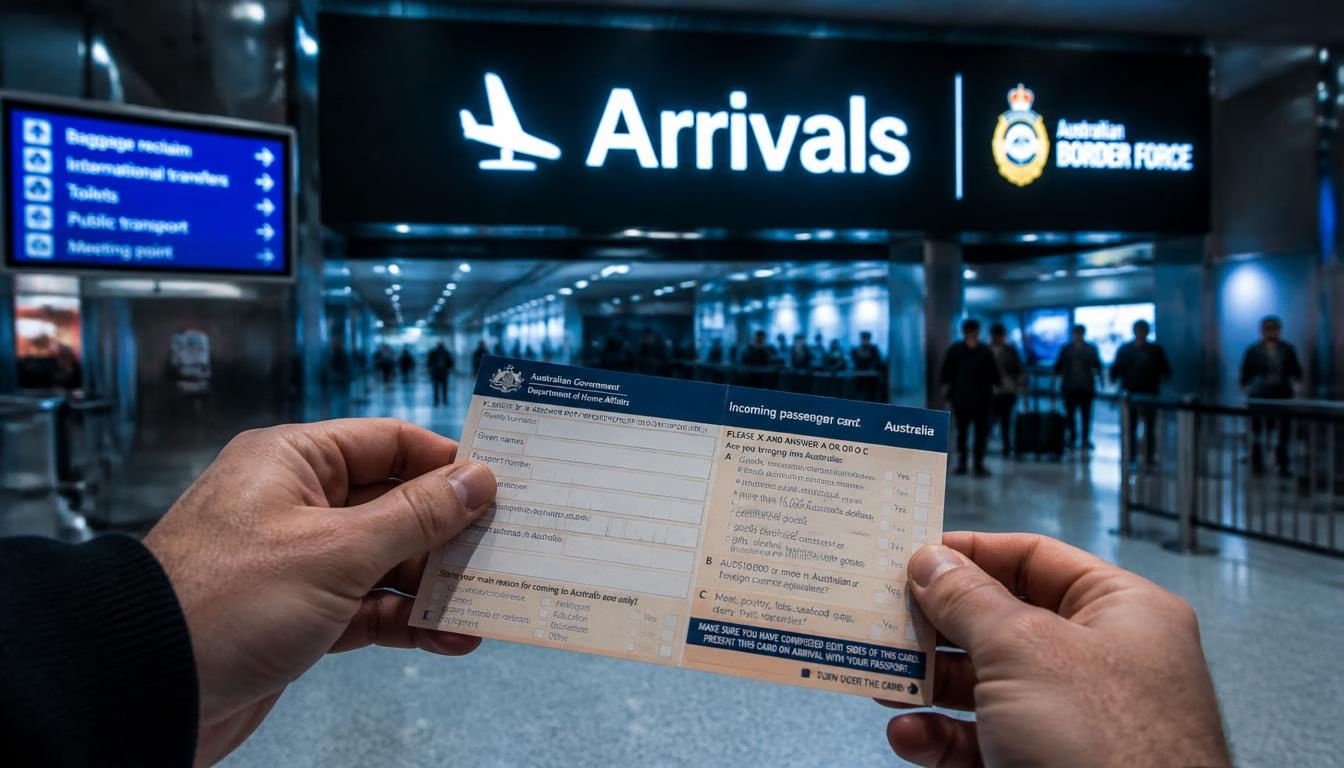
Imagine stepping off a gruelling 14-hour international flight. You are exhausted, jet-lagged, but relieved to finally be touching down in Australia. You walk toward the immigration clearance desk, hand over your passport, and expect the familiar sound of a stamp or the green light of the eGate.

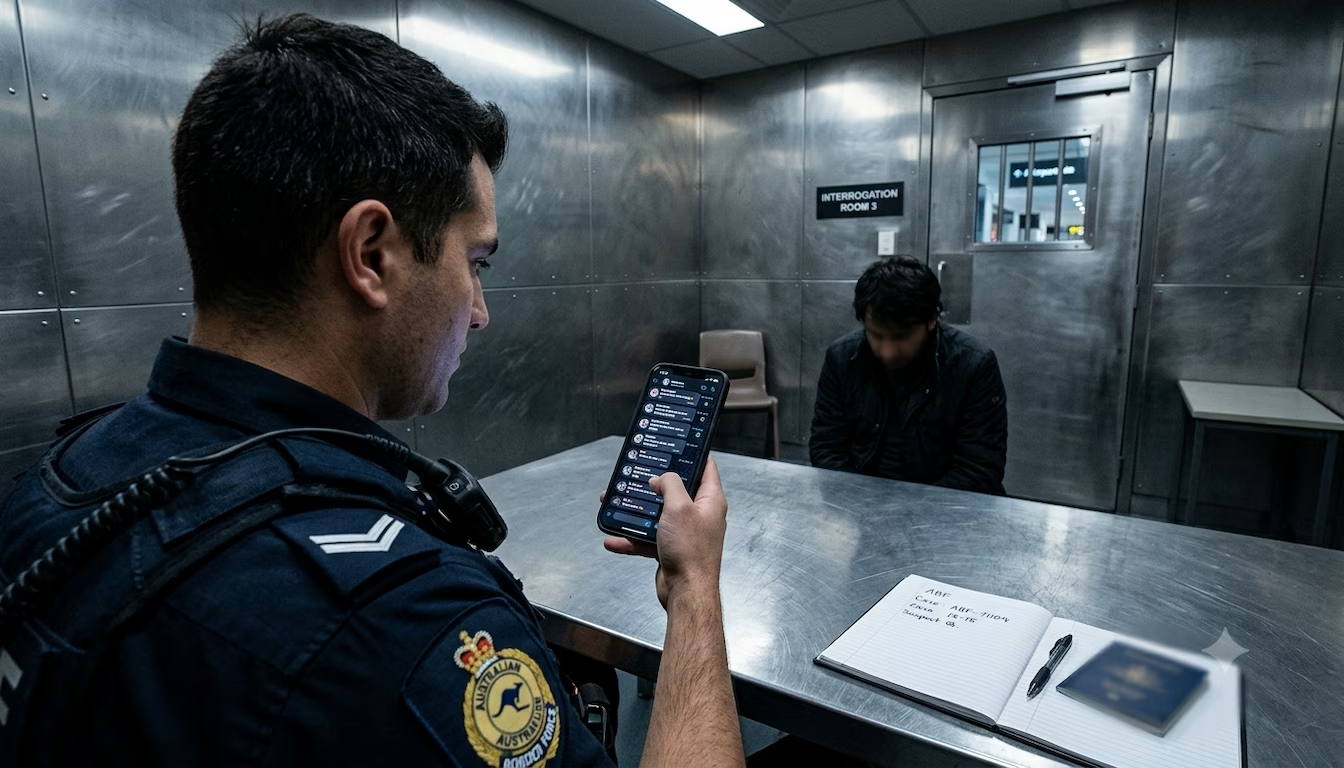
Instead, an Australian Border Force (ABF) officer pulls you aside. They ask you to step into a sterile, windowless room. They demand your phone passcode. Within minutes, the trajectory of your entire life changes.

If you are reading this because your visa, or the visa of a loved one, has just been cancelled at the airport, you are likely in a state of panic. Breathe. You are in the right place.

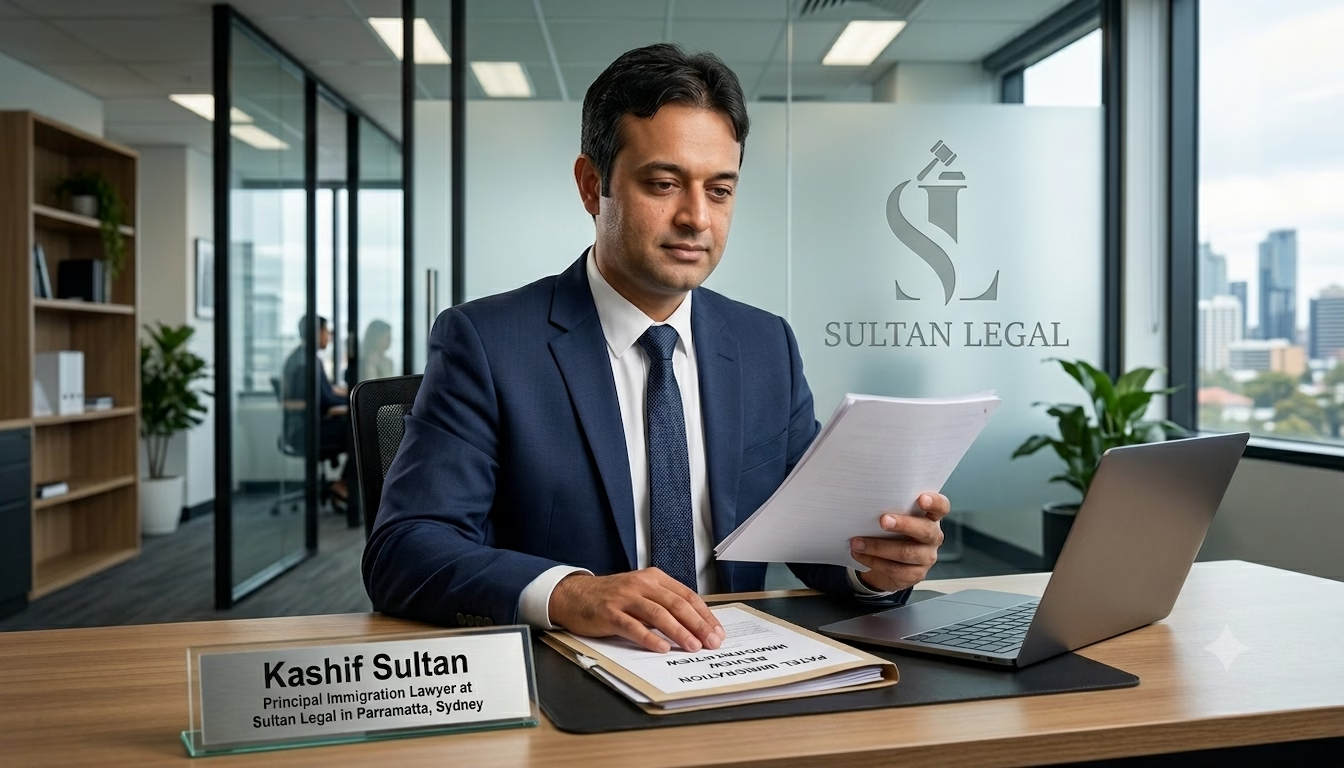
I am Kashif Sultan, Principal Solicitor at Sultan Legal. We have taken the Minister for Immigration to the Federal Court over these exact border cancellations, and we have won. This comprehensive guide will expose exactly how Border Force operates, the hidden traps they use to cancel visas, the psychology of the interrogation room, and the legal lifelines available to save your Australian future.

For thousands of international students, skilled workers, and tourists every year, this is not a hypothetical nightmare, it is a terrifying reality. Airport visa cancellations have surged in recent years, leaving families devastated, life savings lost, and individuals facing immediate deportation and a 3-year ban from Australia.

The Terrifying Reality of Airport Visa Cancellations

The immigration clearance zone at an Australian airport is a unique legal vacuum. When you disembark a plane, you are physically on Australian soil, but legally, you have not yet “entered” the country.

In this liminal space, Australian Border Force officers possess extraordinary, sweeping powers. They do not need a police warrant to search your luggage. They do not need a judge’s order to seize your phone and read your private WhatsApp messages. They operate under strict directives to protect the Australian border, and they are trained to look for any inconsistency, no matter how small.

When an ABF officer suspects you have breached a condition of your visa or provided false information, they can trigger a rapid cancellation process. Unlike cancellations that occur while you are living in the community which often take months and involve extensive written correspondence airport cancellations happen in a matter of hours.

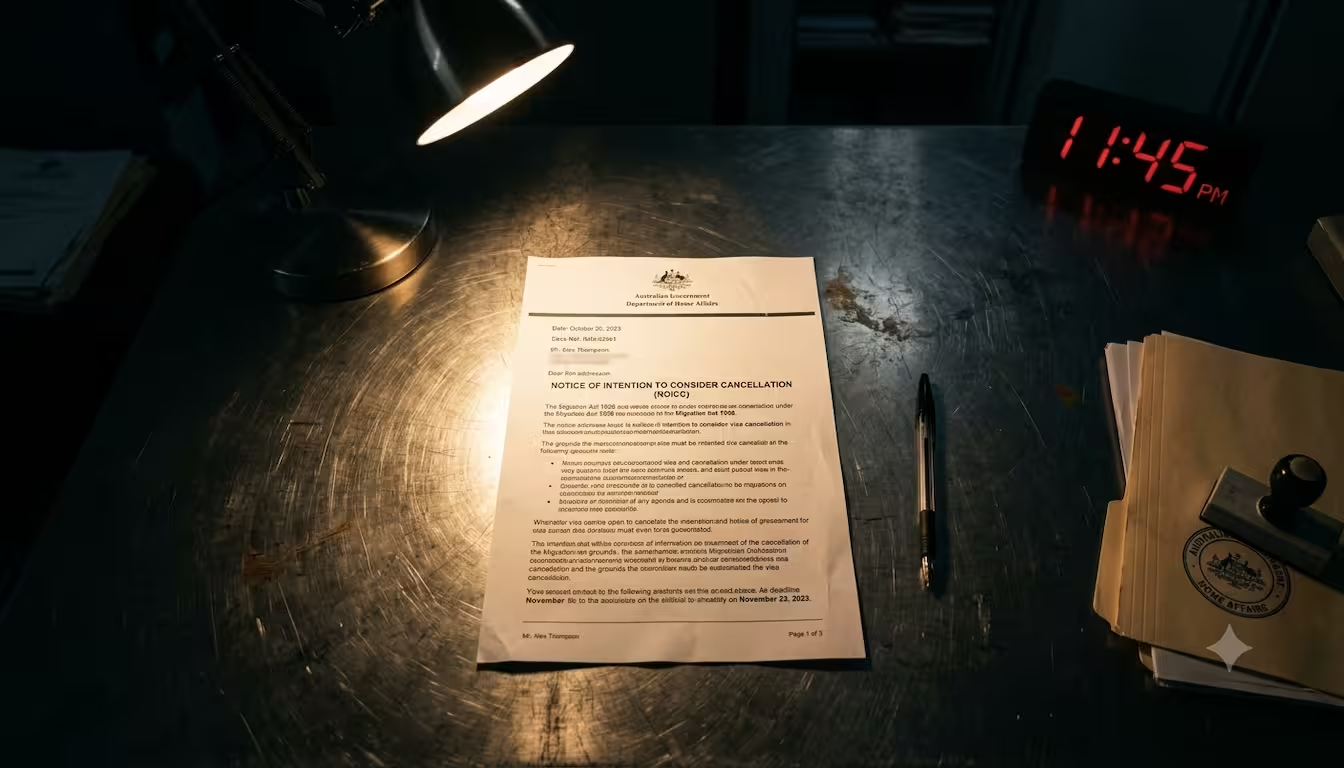
If you are currently at the airport or in an immigration transit facility holding a Notice of Intention to Consider Cancellation (NOICC), do not sign anything without understanding its contents. You have the right to seek legal counsel.

Section 116 of the Migration Act: The Weapon of Choice

To fight a border cancellation, you must understand the weapon being used against you. The vast majority of temporary visa cancellations at the airport are executed under Section 116 of the Migration Act 1958.

Section 116 gives the Minister (and by extension, ABF delegates) the discretionary power to cancel a visa if they are satisfied that certain prescribed grounds exist. This is not a criminal court; the burden of proof is much lower.

The most common grounds invoked under Section 116 include:

Section 116(1)(a):

The decision to grant the visa was based on a fact or circumstance that no longer exists.

Section 116(1)(a):
Section 116(1)(b):

You have not complied with a condition of the visa (e.g., working more than your allowed hours).

Section 116(1)(b):
Section 116(1)(e):

Your presence in Australia is a risk to the health, safety, or good order of the Australian community (frequently used for biosecurity breaches).

Section 116(1)(e):
Section 116(1)(fa):

In the case of a student visa, you are not, or are likely not to be, a genuine student.

Section 116(1)(fa):
Section 116(1)(g):

A prescribed ground under the Migration Regulations applies to you (such as importing objectionable goods under Regulation 2.43).

Section 116(1)(g):

The critical word in Section 116 is discretionary. Even if a ground for cancellation exists, the ABF officer does not have to cancel your visa. They must weigh your individual circumstances, the hardship cancellation would cause, and the purpose of the law. This discretion is exactly where Sultan Legal attacks flawed cancellations in court.

The 5 Major Hidden Traps at Australian Airports

ABF officers are highly trained to find reasons to enliven Section 116. Based on our extensive experience defending migrants, here are the five most devastating traps you must be aware of.

Trap 1: The WhatsApp Auto-Download (Regulation 4A)

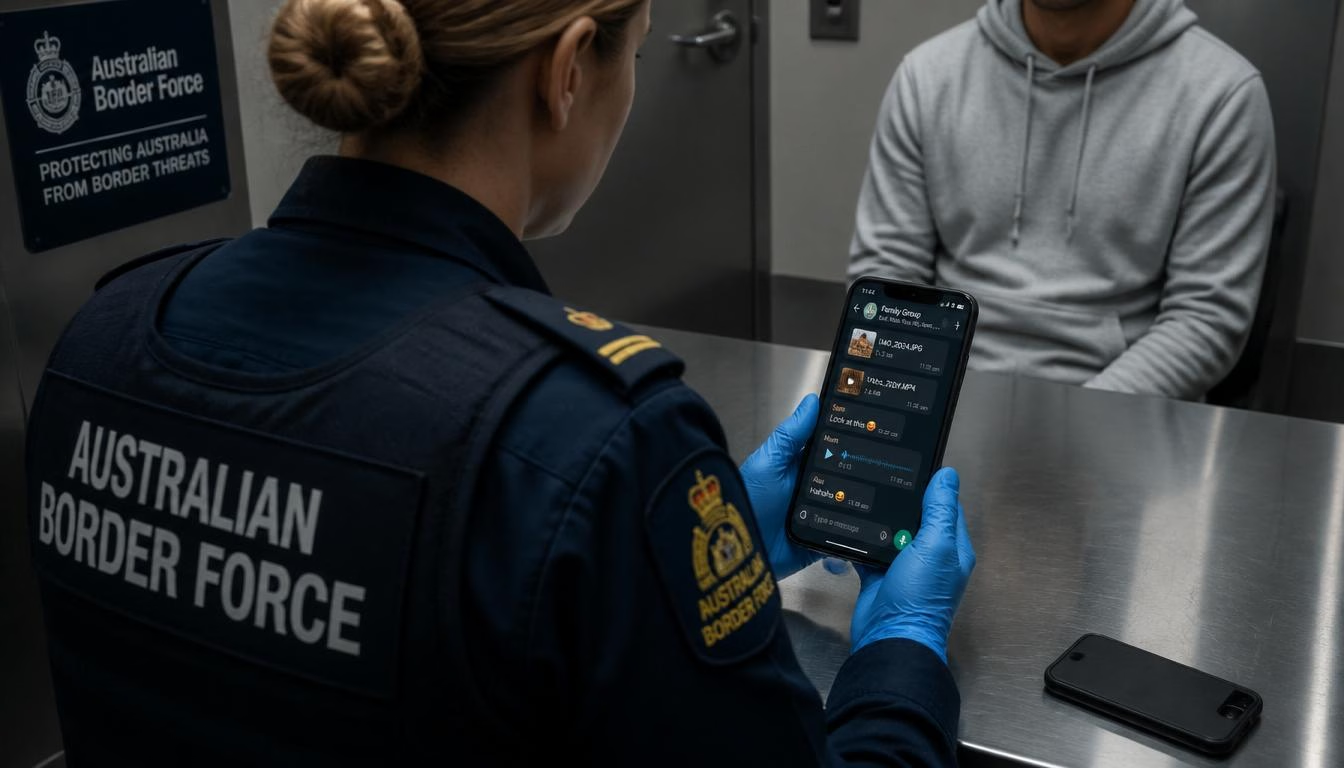
This is currently one of the most dangerous traps for South Asian migrants. It is common in India, Pakistan, Nepal, and Bangladesh to be part of large, unmoderated WhatsApp family or community groups. By default, WhatsApp auto-downloads all media to your phone’s gallery.

If someone in that group forwards a highly offensive video (such as child exploitation material), and an ABF officer finds it during a random phone search, you will be accused of “importing objectionable goods” under Regulation 4A of the Customs Regulations.

Even if you never watched the video, never searched for it, and didn’t know it was there, Border Force will issue a cancellation under Section 116(1)(g).
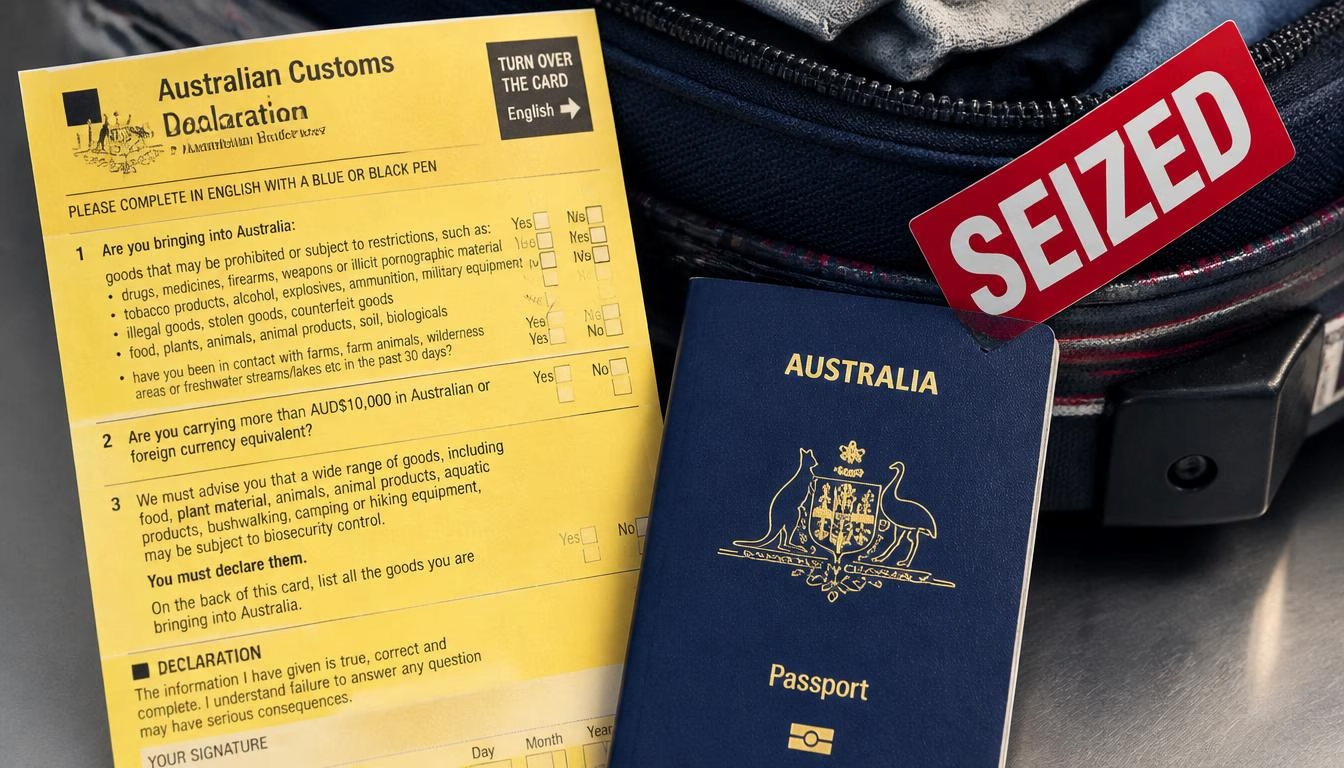
Australia has some of the strictest biosecurity laws on the planet. Returning students and workers often bring back homemade food, spices, or agricultural products from their home countries.

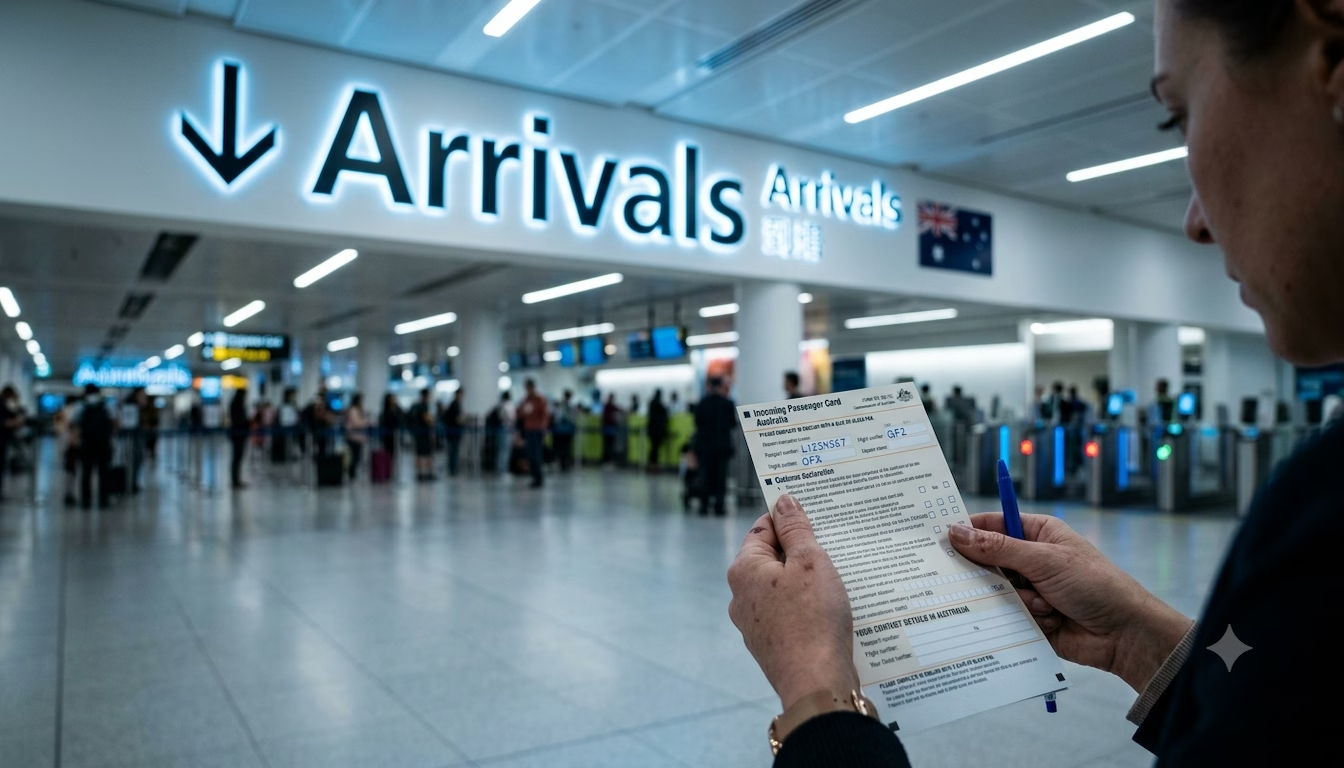
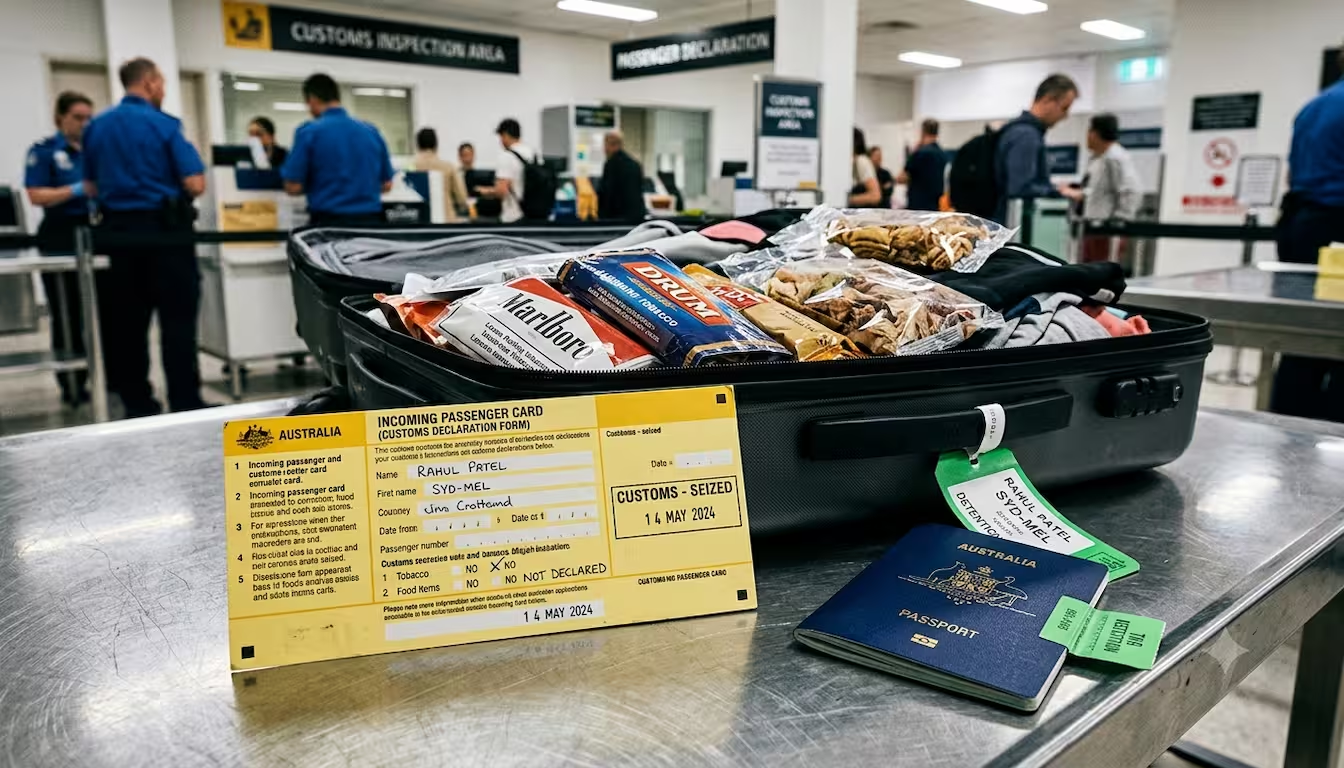
If you fail to declare a meat, dairy, or plant product on your yellow Incoming Passenger Card (IPC), ABF will not just throw the food in the bin. Under a recent government crackdown, they will argue that you pose a risk to the “health, safety or good order” of Australia’s agricultural sector. Your visa will be cancelled on the spot, and you will be deported.

If you are entering Australia on a Student Visa, the ABF officer may search your laptop, iPad, or email outbox to verify that you are a Genuine Student.

They are looking for the “Hidden Resume” an updated CV on your hard drive that states you are seeking full-time, permanent corporate employment in Sydney, rather than focusing on your studies. They will also read your text messages. If you texted a friend saying, “I don’t care about this college course, I just need a pathway to PR,” they will use your own words to cancel your visa under Section 116(1)(fa).

Student visa holders are strictly limited to a set number of work hours per fortnight (currently 48 hours). ABF knows that many students struggle financially and breach this condition.

During a phone search, they will look through your photo gallery for screenshots of rosters, or read texts to your employer negotiating extra cash-in-hand shifts. Even if the breach happened two years ago, historical evidence of non-compliance is enough to trigger a cancellation under Section 116(1)(b).

While Section 116 handles most administrative breaches, Section 501 of the Migration Act deals with the “Character Test.” If ABF discovers that you have a criminal conviction in your home country that you did not declare on your visa application even a minor traffic offence or a dismissed charge they can argue you fail the character test and cancel your visa.
Sultan Legal successfully proved that cancelling a graduate's visa over an unknown WhatsApp video without proving a risk to the community lacked intelligible justification and constituted a Jurisdictional Error.

The Interrogation Room: Inside the NOICC Process

Understanding the psychological environment of a Border Force interrogation is vital. It is designed to be intimidating, rapid, and disorienting.

If an officer suspects a breach, they will escalate your case to a Delegate of the Minister. This delegate will formally issue you a Notice of Intention to Consider Cancellation (NOICC).

The 15-Minute Window

By law, the NOICC must invite you to comment on why your visa should not be cancelled. However, at the airport, you are not given days or weeks to respond. In many cases, you are given as little as 10 to 15 minutes to prepare a defense before the formal interview begins.

You are exhausted, terrified, and cut off from your family. In this state, many migrants make fatal mistakes. They guess answers. They lie out of fear. Or they agree with the officer’s accusations just hoping the nightmare will end.

YOUR RIGHTS DURING AN ABF INTERVIEW:

1) Do not guess

If you do not know the answer to a question (e.g., “How did this file get on your phone?”), say “I do not know.” Do not invent a story.

If your English is not perfect, demand an interpreter. Do not let nuances get lost in translation.

Read the written transcript of your interview carefully. If the officer paraphrased you incorrectly, refuse to sign it until it is fixed.

While they may pressure you to proceed, strongly state your desire to speak with your lawyer.

The Departmental Policy (PAM3)

During the interview, the delegate must assess your answers against Departmental policy, known as PAM3. They must consider:

  • The purpose of your travel.
  • The extent of your past compliance.
  • The degree of hardship cancellation will cause you and your family.
  • The circumstances beyond your control.


Unfortunately, many delegates use a “mechanical formula,” giving your severe hardship only “a little weight” while giving the visa breach “significant weight.” This flawed logic is exactly how visas are unfairly cancelled.

Immediate Consequences: Detention and the 3-Year Ban

If the delegate decides to cancel your visa, the consequences are instantaneous and devastating.

1. You Become an Unlawful Non-Citizen

The moment the cancellation is finalized, your legal status vanishes. You are now an "unlawful non-citizen" under Australian law.

2. Immigration Detention

You cannot be released into the Australian community without a valid visa. You will be escorted by security to an immigration transit facility (such as the Villawood Immigration Detention Centre or a designated airport hotel facility) while arrangements are made for your removal from Australia.

3. The 3-Year Exclusion Ban (PIC 4013)

Perhaps the most destructive consequence of a Section 116 cancellation is the activation of Public Interest Criterion (PIC) 4013. This provision places a mandatory 3-year ban on you, preventing the grant of almost all temporary visas to Australia. This ban will follow you globally, as you will have to declare the cancellation on future visa applications to the US, UK, Canada, and Europe.

The Legal Lifeline: How to Fight Back and Win

If you are reading this while a loved one is in detention, or if you have just been deported, do not lose hope. A cancellation is a decision, and decisions can be overturned by a skilled legal team.

At Sultan Legal, we deploy a three-tiered aggressive strategy to save our clients’ futures.

Phase 1: Bridging Visas and Halting Deportation

If you are still in Australia in detention, our immediate priority is stopping the plane. We can apply for a Bridging Visa E (BVE) to secure your release into the community while we fight the legal battle. If Border Force attempts to remove you quickly, we can file an urgent interlocutory injunction in the Federal Court to legally halt the deportation.

If your visa was cancelled while you were physically in Australia (e.g., you were already living here and Border Force raided your workplace), you generally have the right to appeal to the Administrative Appeals Tribunal (AAT).

The AAT conducts a “merits review.” This means they step into the shoes of the Border Force officer and look at all the facts freshly. We can present new evidence, character references, and prove that the hardship of cancellation outweighs the breach.

Here is the critical catch: If your visa is cancelled while you are in immigration clearance at the airport, you generally do not have the right to an AAT merits review.

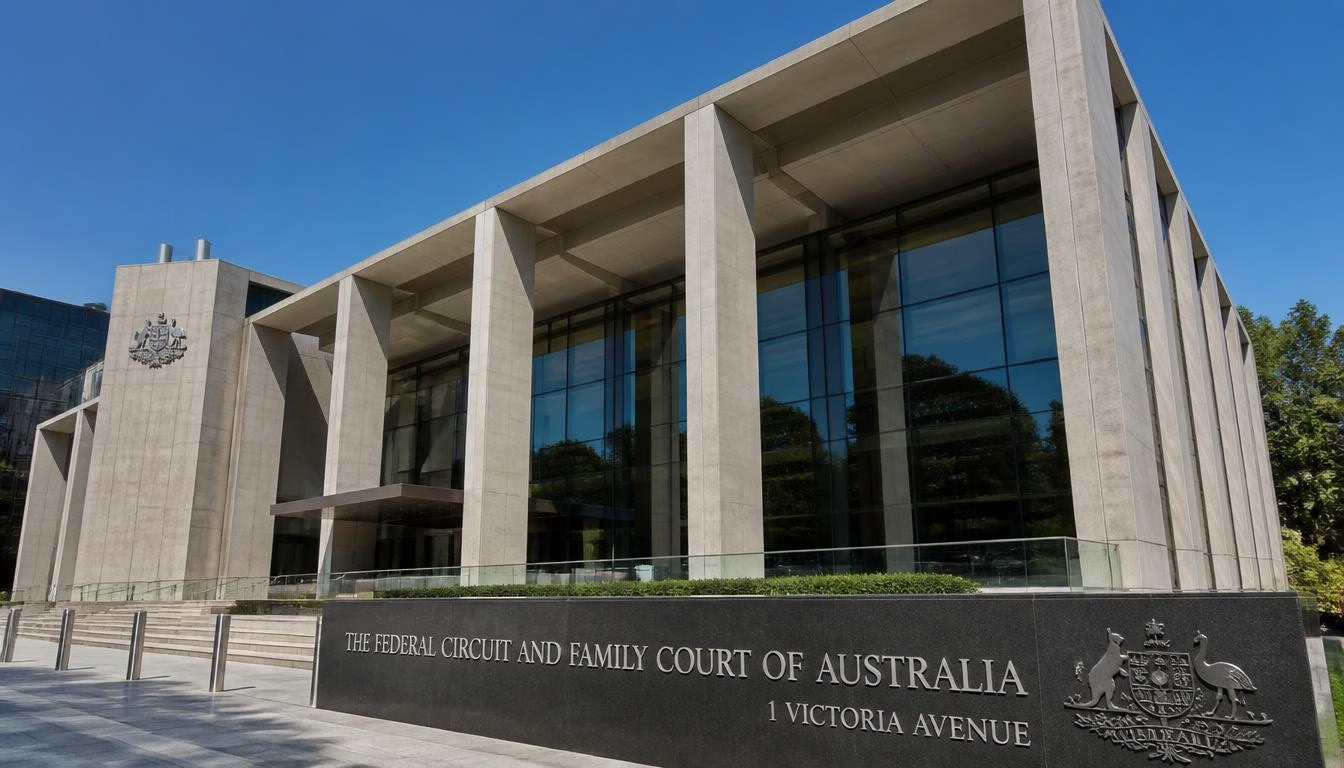
Your only lifeline is appealing directly to the Federal Circuit and Family Court.

The Federal Court does not care if the decision was “unfair.” They only care if it was “unlawful.” We must prove that the ABF delegate committed a Jurisdictional Error.

Jurisdictional error occurs when a decision-maker fundamentally misunderstands the law, fails to consider mandatory policies, or makes a decision so legally unreasonable that it lacks intelligible justification.

In our landmark victory in Sajjad v Minister, we proved exactly this. We demonstrated that the ABF delegate failed to consider the actual purpose of the cancellation power (protecting the community) when they cancelled a Subclass 485 visa over an auto-downloaded WhatsApp video that the client never even knew existed. The judge agreed, quashed the cancellation, and restored our client’s life.

How to Protect Your Visa Before You Fly

If you have a valid temporary visa and are planning to travel to Australia, you must treat the border like a highly secure perimeter. Prevention is always better than litigation.

1) Audit Your Digital Life

Go into the settings of WhatsApp, Telegram, and Messenger right now. Turn off “Auto-Download Media.” Leave large, unmoderated group chats. Do not travel with electronic devices containing questionable material, outdated resumes, or texts discussing visa manipulation.

Pack your own bags. Do not bring any food, seeds, wood products, or traditional medicines without declaring them. When in doubt on the Incoming Passenger Card, tick “Yes.”

Memorize the exact conditions of your visa (e.g., your work hour limits, your course enrollment requirements). Ensure you have hard copies of your CoE, university timetable, and financials ready in your carry-on luggage.

Put Sultan Legal’s emergency contact number in your phone. If you are pulled aside, you will know exactly who to call.

Why Choose Sultan Legal in Parramatta?

When you are fighting the immense resources of the Australian Department of Home Affairs, you cannot afford a lawyer who is learning on the job. You need a battle-tested litigator.

At Sultan Legal, based in the heart of Parramatta, we don’t just process visa applications we specialize in complex migration litigation. We understand the sheer terror of an airport cancellation, and we know how to dismantle flawed Border Force reasoning in the Federal Court.

If your visa has been cancelled, the clock is ticking. You have strict statutory deadlines to file an appeal. Once those deadlines pass, your options evaporate.

Available for immediate intervention for clients in immigration detention.

Related Articles

Your Trusted Legal Partner in Difficult Times

There are moments in life when you require the expertise of legal professionals who genuinely care. At Sultan Legal, we adopt a compassionate approach, understanding that our clients often face challenging circumstances.

We listen to our clients to understand their legal problems, then we help our clients by tailoring solutions to their unique circumstances.

Play Video
sultan-legal-logo

Take the first step towards resolving your legal issues. Contact Sultan Legal to schedule a consultation with our principal solicitor and the best lawyer in Sydney NSW. Reach out to our Parramatta office to learn how we can assist you.

Our Offices

Copyright © Sultan Legal 2025. All Rights Reserved.