
Australian workplace law is undergoing a fundamental structural shift. The federal government has abolished the traditional quarterly superannuation payment regime.
Understanding how the payday super reforms employers Australia wide face operate is vital for every business owner in Sydney and New South Wales. Employers who fail to align their internal cash flow and employment contracts with these rules face strict financial liabilities, non-deductible tax charges, and severe regulatory enforcement.
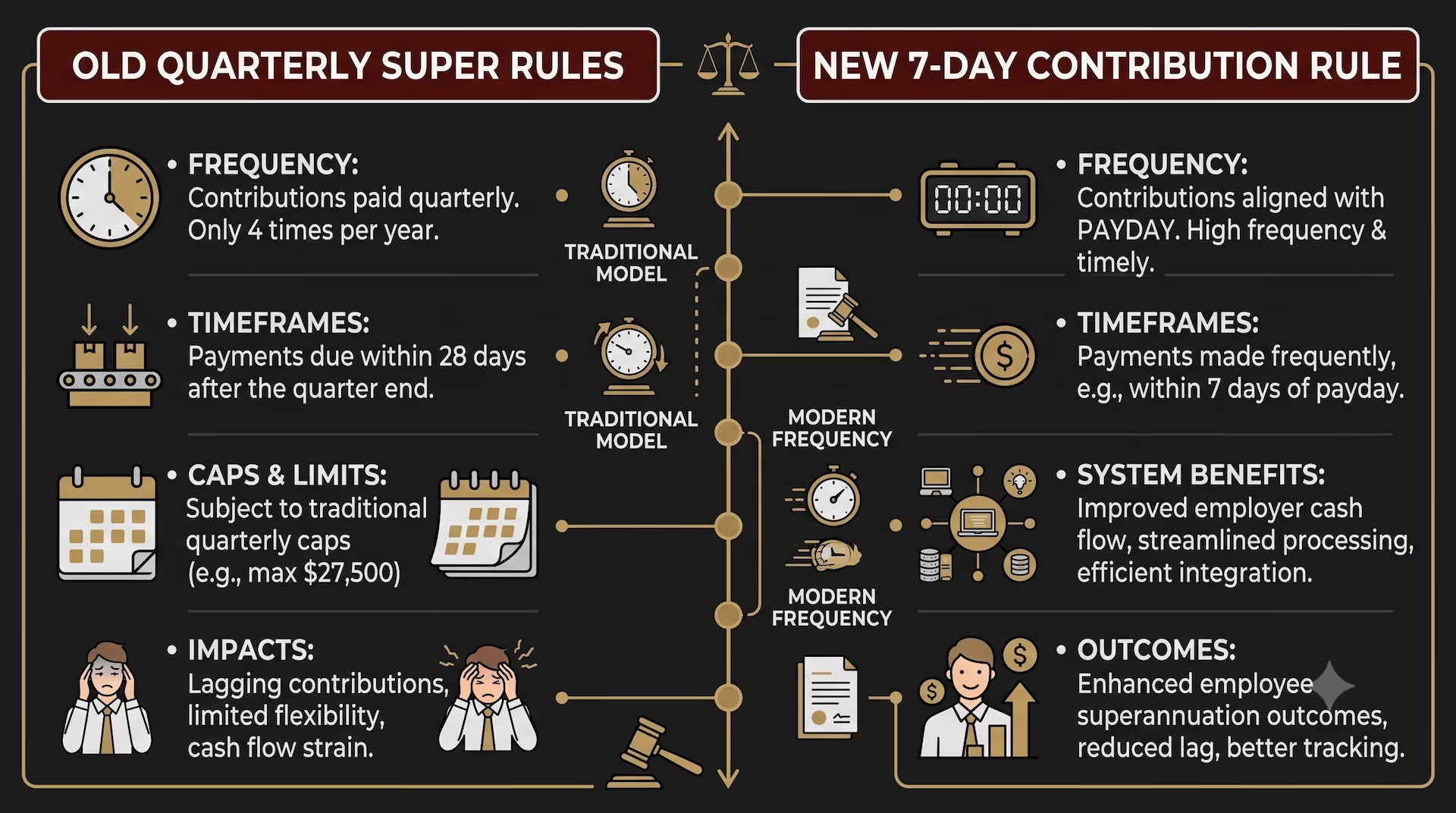
Payday super reforms require Australian employers to pay superannuation guarantee contributions every time wages are paid, replacing the old quarterly model. Contributions must reach employee super funds within seven business days of payday. Failing this deadline triggers automatic ATO penalties, non-deductible interest charges, and potential Fair Work enforcement action against non-compliant businesses.
The old practice of holding superannuation contributions for up to 28 days after the end of a financial quarter is gone. Under the modern framework, every single wage processing event creates an immediate, individual superannuation obligation.
This means whether you pay staff weekly, fortnightly, or monthly, super payments must move at the exact same cadence. Engaging experienced employment lawyers for employers Sydney allows you to audit your business contracts before statutory deadlines catch your business unprepared. Reviewing the official ATO Payday Super Overview confirms that processing clearing house operations early is critical to avoiding compliance failures.
The 7-day super contribution rule mandates that superannuation guarantee payments must be received and allocated by an employee’s super fund within seven business days of wages being paid. The traditional 28-day post-quarter grace period is completely abolished. Employers must adjust cash flow and payroll systems to meet this strict statutory deadline.
The clock starts ticking the moment wages are transferred to your employees. Simply initiating a bank transfer on the seventh day is no longer sufficient; the money must physically clear into the worker’s fund.
The government has permanently closed the Small Business Superannuation Clearing House (SBSCH) to support this shift. Employers must adopt modern payroll software connected directly to real-time clearing systems. A single clearing delay can expose your company to automatic regulatory review.
Superannuation calculations are no longer based strictly on Ordinary Time Earnings (OTE). The law introduces a broader statutory earnings base called Qualifying Earnings (QE).
Qualifying Earnings captures ordinary time earnings, all sales commissions, and pre-tax salary sacrifice amounts. Employers who calculate super contributions on outdated formulas will underpay staff and trigger automatic audits. Consulting knowledgeable corporate governance lawyers Sydney ensures your payroll systems align with broad statutory definitions.
Failing to meet the seven business day clearing deadline attracts a heavily redesigned superannuation guarantee charge penalty. The ATO no longer relies on self-reported quarterly statements the automated data matching identifies late payments instantly.
The updated penalty framework includes:
Details regarding automated penalty calculations are available on the ATO Missed or Late Payday Super Payments portal.
Many existing employment agreements contain clauses specifying quarterly superannuation remittances. Continuing to operate under these outdated contractual terms creates immediate legal friction with national employment standards.
Conducting a thorough review and updating employment contracts NSW wide ensures your workplace agreements reflect modern pay-cycle rules. Your contracts must explicitly define Qualifying Earnings and state that superannuation is remitted in alignment with regular pay frequencies.
Failing to align contracts leaves employers vulnerable to wage breach claims under the Fair Work Act. Integrating these updates into your broader legal business advisory services structure protects company directors from personal liability. The Treasury Payday Super Policy Framework outlines how legislative changes intersect directly with employer obligations.

Moving from paying super four times a year to 26 or 52 times a year creates a major cash flow adjustment. Businesses that used quarterly super reserves as working capital will face immediate liquidity issues.
Employers must establish dedicated, automated payroll buffers to clear super liabilities every pay run. Early legal and financial restructuring prevents operational insolvency when rules take effect.

Preparing for national payroll shifts requires assertive legal guidance. Sultan Legal works alongside Sydney business owners, CFOs, and HR directors to safeguard commercial operations.
Kashif Sultan brings extensive legal experience across corporate governance, commercial litigation, and employment law defense. We conduct comprehensive payroll risk audits, review employment agreements, and ensure your business structures survive regulatory changes.
Our team assists with payroll compliance 2026 planning, updating executive employment packages, and conducting thorough commercial contract review across all workplace agreements. We provide the legal shield your business needs to stay profitable and fully compliant.
Superannuation guarantee contributions must be received and cleared into the employee’s nominated super fund within seven business days of their payday. Initiating a transfer on the seventh day is not enough; funds must physically clear into the account.
No. The Superannuation Guarantee Charge (SGC), including associated administrative uplifts and interest charges, is strictly non-tax deductible. Late payments significantly increase an employer’s net tax liability.
The law provides a limited exception for new hires. Employers are granted an extended window (up to 20 business days) to make the initial super contribution while establishing stapled fund details through the ATO.


There are moments in life when you require the expertise of legal professionals who genuinely care. At Sultan Legal, we adopt a compassionate approach, understanding that our clients often face challenging circumstances.
We listen to our clients to understand their legal problems, then we help our clients by tailoring solutions to their unique circumstances.
Take the first step towards resolving your legal issues. Contact Sultan Legal to schedule a consultation with our principal solicitor and the best lawyer in Sydney NSW. Reach out to our Parramatta office to learn how we can assist you.