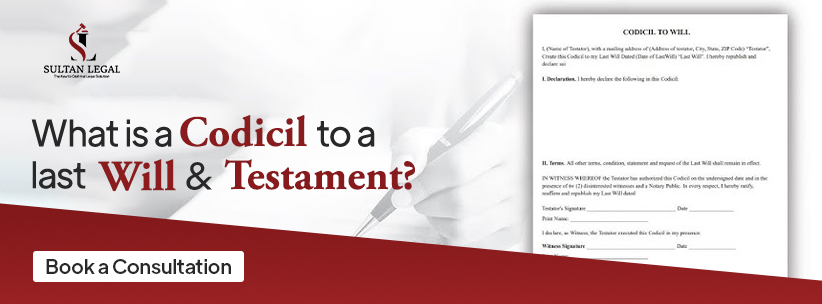
Codicils are designed for straightforward, minor amendments to existing wills. Understanding when a codicil is appropriate versus when a new will is necessary can prevent confusion, legal challenges, and unintended consequences.
When You Should Create a New Will Instead
Situations Requiring a New Will:
- Complex modifications: Extensive changes affecting multiple provisions
- Multiple codicils existing: If you already have 2+ codicils, create a new will to avoid confusion
- Fundamental restructure: Complete reorganization of asset distribution
- Marriage or divorce: Major life events affecting entire estate planning structure
- Significant asset changes: Substantial increase or decrease in estate value
- Business succession changes: Major alterations to business ownership transfer plans
- Contradictory provisions: Changes that conflict with existing will terms
Example: Margaret wants to change her executor from her son to her daughter, increase her grandson's inheritance from $10,000 to $20,000, and add a charity bequest of $5,000. This involves three separate changes but they're all straightforward—a single codicil would be appropriate. However, if Margaret also wants to completely restructure how her property is divided, establish a trust, and change beneficiaries for her superannuation, a new will would be more suitable.
Risks of Multiple Codicils
Having multiple codicils creates significant risks that can undermine your estate planning goals:
- Confusion after death: Executors and beneficiaries must piece together multiple documents to understand final wishes
- Increased dispute risk: More documents create more opportunities for challenges and litigation
- Contradictory provisions: Later codicils may inadvertently contradict earlier ones
- Lost documents: Risk that one codicil gets misplaced, creating incomplete picture
- Probate delays: Courts must review and interpret multiple documents, slowing estate administration
Best Practice: Most estate planning lawyers recommend creating a new will rather than adding a second or third codicil. A fresh will consolidates all changes into one clear, comprehensive document that's easier to interpret and less susceptible to challenges.
Who Can Create a Codicil to Change a Last Will?
Not everyone can create a valid codicil. Australian succession law imposes specific requirements on who has the legal capacity to amend a will through a codicil.
The Testator's Authority
Only the individual who created the original will (the testator) can create a codicil to amend it. No one else—not family members, executors, or legal representatives—can create a codicil on behalf of the testator unless special court orders apply in exceptional circumstances.
1. Mental Competency Requirements
The testator must possess testamentary capacity—the mental ability to understand the nature and consequences of making or amending a will.
Elements of Testamentary Capacity:
- Understand nature of act: Comprehend that they're creating a legal document that will distribute assets after death
- Know extent of assets: Have reasonable awareness of their property and estate value
- Understand beneficiaries: Recognize who should naturally receive inheritance (family, dependents)
- Grasp distribution effects: Understand how the codicil will change asset distribution
- Free from delusions: Not operating under false beliefs affecting judgment
Challenging Capacity: Codicils are particularly vulnerable to challenges based on lack of mental capacity, especially if created when the testator is elderly or ill. Medical evidence contemporary to the codicil's execution (doctor's assessments from around the same time) is crucial in defending capacity challenges.
2. Age Requirements
In NSW and most Australian jurisdictions, a person must be at least 18 years old to create a valid codicil, identical to the requirements for making a will.
Exception for Minors: Under exceptional circumstances, persons under 18 may create a codicil with court approval. This typically applies to minors who are married, in de facto relationships, or have significant assets. However, this requires specific legal counsel and
Supreme Court authorization.
3. Voluntary Action Free from Undue Influence
The testator must create the codicil voluntarily, exercising their own free will without coercion, pressure, or manipulation from others.
What Constitutes Undue Influence:
- Coercion: Threats, intimidation, or force to make specific changes
- Manipulation: Deceptive tactics to influence testamentary decisions
- Overwhelming pressure: Persistent demands from family members or caregivers
- Isolation tactics: Preventing testator from consulting independent advisors
- Exploiting vulnerability: Taking advantage of physical or mental weakness
If a codicil is challenged on grounds of undue influence, the burden typically shifts to the person benefiting from the codicil to prove it was made freely and voluntarily.
How to Create a Valid Codicil in Australia
Creating a legally valid codicil requires following specific procedures mandated by succession legislation. Failure to comply with these formalities can render the codicil invalid, leaving the original will unchanged.
Step-by-Step Process
1. Identify Specific Changes Needed
- Review your existing will carefully
- List the exact provisions you want to modify, add, or remove
- Be specific about clause numbers or sections if possible
- Note the desired changes with precise language
2. Draft the Codicil Document
- Title the document clearly: "Codicil to the Last Will and Testament of [Your Full Name]"
- Date the codicil accurately
- Reference the original will with its execution date
- State your full name and that you are the testator
- Declare you are of sound mind and making this codicil voluntarily
3. State Changes Clearly and Precisely
- Use clear, unambiguous language for each amendment
- Number each change if making multiple modifications
- Be specific: "I hereby revoke clause 4 of my will" or "I add the following new clause..."
- Avoid vague terms that could be interpreted multiple ways
- Reference specific sections of the original will being changed
4. Include Confirmation Statement
- Conclude with a statement confirming the rest of the will remains unchanged
- Example: "In all other respects, I confirm my Will dated [date] and declare this Codicil to form part of my Will."
- This prevents confusion about whether other provisions are affected
5. Execute with Proper Formalities
- Sign the codicil: You must personally sign at the end of the document
- Two witnesses present: At least two witnesses must be present when you sign
- Witnesses sign: Both witnesses must sign the codicil
- Witness qualifications: Witnesses cannot be beneficiaries or spouses/partners of beneficiaries
- Same time requirement: All signing should occur in a single signing session
- Date confirmation: Ensure the date is clearly recorded
Critical Execution Requirements: The execution formalities for codicils are identical to those for wills under the Succession Act 2006 (NSW). If witnesses are beneficiaries under the codicil or original will, their gifts are void. If only one witness signs, the codicil is invalid. These requirements are strict and courts rarely excuse non-compliance.
6. Store the Codicil Properly
Proper storage is crucial to ensure the codicil is found and implemented after your death.
- Store with original will: Keep the codicil with your will, but don't attach or staple them together
- Inform executor: Tell your executor(s) about the codicil's existence and location
- Safe location: Use a fireproof safe, solicitor's office, or secure document storage
- Avoid attachment: Never staple or physically attach the codicil to the will—staple holes or attachment marks can raise questions about whether documents were removed
- Multiple copies: Consider keeping copies (clearly marked as copies) with your lawyer, but store the original securely
Probate Requirement: The executor must present both the original will and all original codicils when applying for probate. If any codicil is missing, it can delay the probate grant significantly. Inform trusted family members and your executor where these documents are kept.
Codicil Template Example
Below is a sample codicil template demonstrating the proper structure and language. This template is for educational purposes only—always seek legal advice before creating a codicil to ensure it meets your specific needs and complies with your jurisdiction's requirements.
CODICIL TO THE LAST WILL AND TESTAMENT
I, [YOUR FULL LEGAL NAME], of [YOUR FULL ADDRESS], declare this to be a Codicil to my Last Will and Testament dated [DATE OF ORIGINAL WILL].
I am of sound mind and make this Codicil freely and voluntarily without any undue influence.
AMENDMENTS:
1. I hereby revoke Clause [NUMBER] of my Will which appointed [PREVIOUS EXECUTOR NAME] as Executor and replace it with the following:
"I appoint [NEW EXECUTOR NAME] of [EXECUTOR ADDRESS] as the Executor of my Will and Estate."
2. I add the following new bequest to my Will:
"I give and bequeath to [BENEFICIARY NAME], the sum of $[AMOUNT] to be paid from my estate."
CONFIRMATION:
In all other respects, I confirm my Will dated [DATE OF ORIGINAL WILL] and declare this Codicil to form part of my Will.
DATED this ___ day of ____________, 20___
_________________________________
Signature of Testator: [YOUR NAME]
SIGNED by the Testator in our presence, and by us in the presence of the Testator and each other:
Witness 1:
Signature: _________________________________
Full Name: _________________________________
Address: _________________________________
Occupation: _________________________________
Witness 2:
Signature: _________________________________
Full Name: _________________________________
Address: _________________________________
Occupation: _________________________________
Important Template Notes:
- This is a simplified example template for illustration purposes only
- Actual codicils should be tailored to your specific circumstances and jurisdiction
- Witnesses must not be beneficiaries under the will or codicil
- All parties should sign in each other's presence during a single session
- Professional legal advice is strongly recommended before executing a codicil
- Complex changes may require a new will rather than a codicil
⚖️ Professional Codicil Drafting
While templates provide guidance, professionally drafted codicils ensure legal validity and avoid costly disputes. Our estate planning lawyers can draft, review, and execute your codicil with proper formalities.
📅 Get Expert Codicil Assistance
Can a Codicil Be Challenged?
Yes, codicils are subject to the same legal challenges as wills. In fact, codicils may be more vulnerable to challenges because they're often created later in life when testamentary capacity may be diminished.
Common Grounds for Challenging a Codicil
1. Lack of Testamentary Capacity
- What it means: The testator lacked mental capacity to understand the codicil's nature and effects when creating it
- Evidence used: Medical records showing dementia, Alzheimer's, cognitive impairment, mental illness, or medication effects
- Timing matters: Capacity is assessed at the moment the codicil was signed, not before or after
- Vulnerability period: Codicils created during terminal illness or in nursing homes face heightened scrutiny
2. Undue Influence
- What it means: Someone coerced, manipulated, or pressured the testator to create the codicil against their true wishes
- Common scenarios: Adult children pressuring elderly parents, caregivers manipulating vulnerable testators, isolation from family
- Burden of proof: Once undue influence is suspected, the benefiting party must prove the codicil was made freely
- Warning signs: Sudden changes favoring one person, secretive codicil creation, isolation of testator
3. Fraud or Forgery
- Fraudulent codicil: The document was created through deception or false representations
- Forged signature: The testator's signature was faked or signed without their knowledge
- Witness fraud: Witnesses didn't actually witness the signing or forged their signatures
- Forensic evidence: Handwriting analysis and document examination can detect forgery
4. Improper Execution
- Missing witnesses: Fewer than two witnesses present or witnesses didn't sign
- Beneficiary witnesses: Witnesses who were beneficiaries (their gifts are void, potentially invalidating codicil)
- Not signed properly: Testator didn't sign or signed after witnesses
- Formality failures: Not complying with Succession Act requirements
5. Contradictions or Ambiguities
- Conflicts with will: Codicil contradicts the original will in confusing ways
- Unclear language: Vague or ambiguous terms that could mean multiple things
- Mathematical errors: Percentages or amounts that don't add up correctly
- Impossible provisions: Gifts of assets the testator doesn't own
Who Can Challenge a Codicil?
The following parties typically have standing to challenge a codicil:
- Beneficiaries under original will: Those whose inheritance is reduced by the codicil
- Executors: When concerned about validity or proper execution
- Family members: Spouse, children, dependents who have been disadvantaged
- Creditors: In some circumstances where estate distribution affects debt repayment
Time Limits for Challenging
Challenges to codicils must typically be brought within specific time limits that vary by jurisdiction:
NSW Time Limits:
- Family provision claims: 12 months from date of death
- Validity challenges: No strict time limit but must be before probate is finalized or shortly after
- Late claims: Court may extend time limits in exceptional circumstances with reasonable explanation
Lessons from Celebrity Estate Disputes
High-profile estate disputes involving wills and codicils demonstrate the importance of clear, professionally drafted testamentary documents.
Larry King's Handwritten Will Amendment
The renowned talk show host's estate faced legal disputes when a handwritten codicil disinheriting his wife surfaced after his death, leading to costly litigation and family conflict.
Aretha Franklin's Three Conflicting Wills
The "Queen of Soul" had three different handwritten wills discovered after her death, creating confusion about her true intentions and sparking family legal battles that took years to resolve.
Tony Hsieh's Lack of Will
The former Zappos CEO died without a valid will, resulting in complex legal proceedings to settle his substantial estate and uncertainty about his wishes.
5 Critical Lessons for Your Will and Codicils
1. Type Your Will and Codicils
- Handwritten (holographic) wills and codicils are difficult to validate
- Some jurisdictions don't accept handwritten testamentary documents
- Typed documents are clearer, easier to read, and harder to dispute
- If handwriting, ensure perfect legibility and check your state's validity requirements
- Never cross out or write over text—create a new document instead
2. Include Proper Legal Language
- State explicitly that this is your will/codicil and reflects your final wishes
- Revoke all previous wills/codicils if creating a new will
- Declare you are of sound mind and acting without coercion
- Sign the physical copy in front of two or more qualified witnesses
- Use precise legal terminology to avoid ambiguity
3. Understand Property Laws
- Know how succession laws in your state affect asset distribution
- Understand family provision legislation that may override your wishes
- Be aware of spouse and children's legal entitlements
- Consider how superannuation and life insurance are treated (often outside wills)
- Seek legal advice if excluding spouse or children
4. Keep Documents Updated and Stored Safely
- Review and update your will every 3-5 years or after major life events
- When updating, destroy all previous versions except the most current
- Store original documents in fireproof safe or with solicitor
- Keep will and all codicils together but not physically attached
- Inform executor of storage location
- Critical: Executor needs original will and all codicils for probate—missing documents cause delays
5. Communicate Your Wishes
- Have honest conversations with family about your estate plans
- Explain your reasoning for distributions to prevent surprises
- Consider sharing will contents (or general approach) with beneficiaries
- Address concerns or unexpected wishes from loved ones
- Reduce likelihood of will contests through transparency
🛡️ Protect Your Estate from Disputes
Professional legal guidance prevents costly estate disputes and ensures your wishes are clearly expressed and legally enforceable. Our litigation lawyers also assist with will challenges and estate disputes.
📅 Secure Your Estate Planning Today
Why You Need a Lawyer for Codicils
While legally you can create a codicil without a lawyer, professional legal assistance provides crucial benefits that far outweigh the cost.
Benefits of Professional Codicil Drafting
What a Lawyer Provides:
- Accuracy assurance: Verifies the codicil precisely reflects your intentions
- Legal compliance: Ensures compliance with Succession Act requirements
- Strategic advice: Guides you on whether a codicil or new will is more suitable
- Jurisdictional expertise: Addresses state-specific legal differences
- Clarity of language: Uses precise legal terminology avoiding ambiguity
- Execution supervision: Ensures proper signing and witnessing procedures
- Challenge prevention: Drafts documents resistant to legal challenges
- Tax implications: Considers potential tax consequences of changes
Risks of DIY Codicils
Common DIY Codicil Mistakes:
- Improper execution: Failing to meet witnessing requirements, invalidating the codicil
- Ambiguous language: Unclear wording leading to disputes about meaning
- Unintended consequences: Changes that create tax problems or contradict other provisions
- Incomplete revocation: Not properly revoking conflicting provisions
- Beneficiary witnesses: Using witnesses who are beneficiaries, voiding their gifts
- Lost documents: Improper storage leading to codicil being lost or destroyed
When Legal Advice is Essential
Certain situations absolutely require professional legal assistance:
- Complex estates: Business interests, trusts, international assets
- Blended families: Children from multiple relationships requiring careful provision
- Dependents with disabilities: Special needs trusts and government benefit considerations
- Disinheritance: Excluding spouse or children (strong legal advice required)
- Elderly or ill testators: Higher risk of capacity challenges requiring careful documentation
- Contentious families: Anticipated disputes requiring challenge-resistant drafting
Frequently Asked Questions
Can I write a codicil by hand?
Yes, handwritten (holographic) codicils are valid in most Australian states including NSW if properly executed with witnesses. However, typed codicils are strongly recommended as handwritten documents are more vulnerable to challenges regarding validity, legibility, and testamentary capacity. Handwritten codicils should only be used in emergencies, and professional legal review is essential. Some jurisdictions don't recognize handwritten testamentary documents at all.
How many codicils can I have to one will?
Legally, there's no limit on the number of codicils you can create. However, having more than one or two codicils significantly increases confusion, contradictions, and dispute risk. Most estate lawyers recommend creating a new consolidated will rather than adding a second codicil. Multiple codicils make estate administration more complex and increase the likelihood of provisions being overlooked or misinterpreted. If you're considering a third codicil, definitely create a new will instead.
Can I appoint an executor who lives outside Australia?
Yes, you can appoint an overseas executor through a codicil. However, this often creates logistical complications including difficulty attending court hearings, delays in estate administration, potential tax implications, and challenges obtaining probate. The overseas executor may need to appoint a local agent or attorney in Australia. It's advisable to consult an experienced estate planning lawyer before appointing a foreign executor to understand the practical implications and potentially appoint a co-executor residing in Australia.
What is the deadline for challenging a will or codicil?
Time limits vary by jurisdiction. In NSW, family provision claims must be brought within 12 months of the deceased's death. Other validity challenges (capacity, undue influence, execution) should be raised before or shortly after probate is granted. Tasmania has shorter timeframes (3 months), while some states allow 12 months. Courts may permit late claims if there's a reasonable explanation for the delay. Time limits are strictly enforced, so legal advice should be sought immediately if considering a challenge.
Which court handles will and codicil challenges?
Will and codicil challenges are heard in the Supreme Court of the relevant state or territory. To challenge a codicil, you must demonstrate improper execution or grounds for suspicion (undue influence, lack of capacity, fraud). Family provision claims (inadequate provision for eligible persons) are also filed in Supreme Court under the relevant succession legislation. Legal proceedings are complex and costly—professional legal representation is essential. Early consultation with an estate litigation lawyer is strongly recommended.
Do I need witnesses for a codicil?
Yes, absolutely. A codicil requires the same execution formalities as a will. You must sign the codicil in the presence of at least two witnesses who then sign in your presence and each other's presence. Witnesses cannot be beneficiaries under the will or codicil, nor spouses/partners of beneficiaries. All parties should sign during a single session. If proper witnessing doesn't occur, the codicil is invalid and your changes won't take effect.
Can a codicil revoke an entire will?
Technically yes, but this is extremely poor practice. If you want to revoke your entire will and create new testamentary provisions, you should create a new will that explicitly revokes all previous wills and codicils. Using a codicil to revoke an entire will creates confusion and increases dispute risk significantly. The proper approach is: codicils for minor amendments, new wills for major changes or complete revocation.
What happens if I lose the original codicil?
If the original codicil is lost, it creates significant problems for probate. Courts generally require original documents, and a lost codicil may be presumed revoked by the testator. You may need to provide secondary evidence (copies, witness testimony) to prove the codicil's existence and contents, which is difficult and expensive. To prevent this, store the original codicil securely with your will, inform your executor of its location, and consider keeping certified copies with your lawyer.
Can I create a codicil without my family knowing?
Yes, you're not legally required to inform family members about codicils. However, secret codicils that surprise beneficiaries after death often trigger disputes and challenges, especially if they significantly disadvantage certain family members. While you can create codicils privately, unexpected changes increase the likelihood of claims based on undue influence or lack of capacity. If you're making contentious changes, document your reasoning and consider discussing your intentions with affected parties.
How much does it cost to create a codicil?
Professional codicil drafting typically costs $300-$800 depending on complexity and lawyer fees. While this may seem expensive, it's far less costly than disputes arising from improperly drafted codicils, which can cost tens of thousands in litigation. The investment in professional drafting provides peace of mind that your changes are legally valid, clearly expressed, and resistant to challenges. Complex codicils or those for large estates may cost more but remain cost-effective compared to creating an entirely new will.
Get Expert Estate Planning Guidance
Codicils are valuable tools for updating your will when used appropriately, but they require careful drafting, proper execution, and strategic consideration of whether a new will might be more suitable. The complexity of succession law and the serious consequences of errors make professional legal assistance highly advisable.
Sultan Legal's experienced estate planning and litigation lawyers in Sydney and Parramatta provide comprehensive services including codicil drafting, will creation, estate planning advice, and representation in will challenges and probate disputes. We understand NSW succession law and ensure your testamentary documents accurately reflect your wishes while minimizing dispute risk.
Legal Disclaimer: This article provides general information about codicils to wills in Australia and should not be considered legal advice. Succession law is complex with significant variations based on individual circumstances, family situations, estate size, and jurisdictional differences. Proper execution requirements are strict and failure to comply can invalidate codicils entirely. Individual legal outcomes cannot be guaranteed. Always consult a qualified estate planning lawyer for advice tailored to your specific situation. Sultan Legal makes no warranties about the accuracy, completeness, or currency of this information. We accept no liability for decisions made based on this content without obtaining proper professional legal advice.
📝 Expert Will & Codicil Services
Whether you need a simple codicil, comprehensive will review, or representation in estate disputes, Sultan Legal's experienced team provides professional estate planning and litigation services. We draft codicils and wills that are legally valid, clearly expressed, and resistant to challenges. Our Sydney and Parramatta lawyers understand the nuances of NSW succession law and can guide you through proper execution procedures to protect your estate and family. Don't risk invalidating your testamentary wishes with DIY documents—get expert assistance to ensure your legacy is protected.
📅 Book Your Estate Planning Consultation
Or call us directly: (02) 8029 0269