
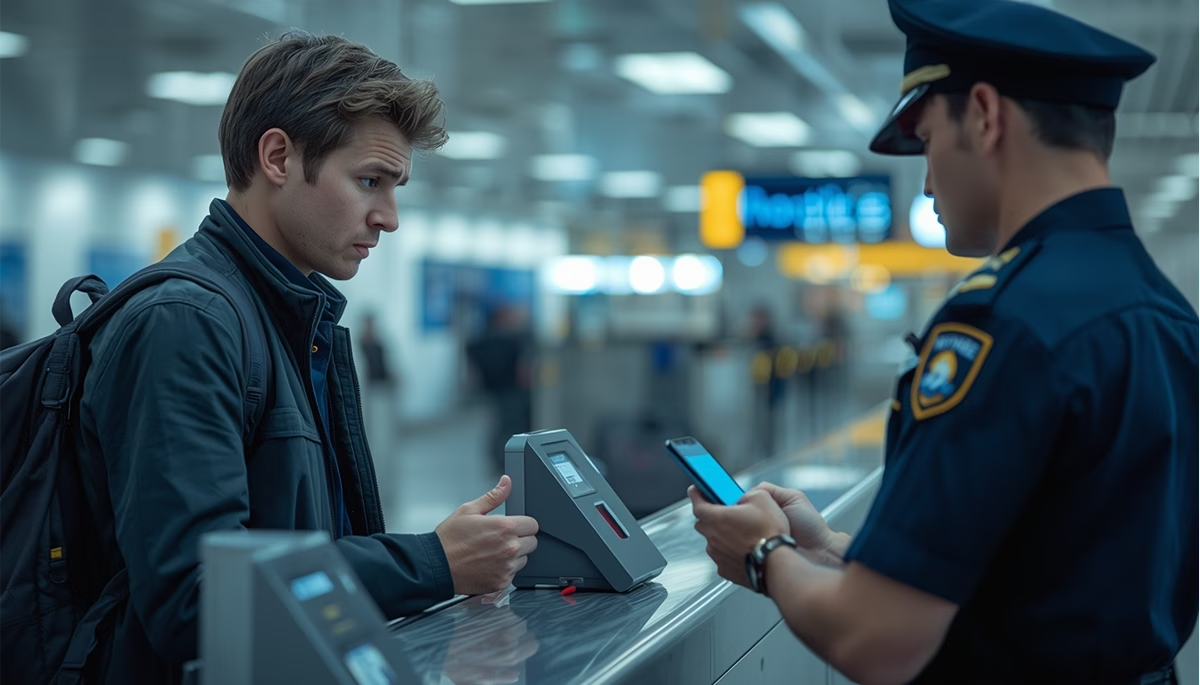
Imagine stepping off a long international flight, exhausted but relieved to be back in Australia finally. You walk toward the immigration clearance desk, hand over your passport, and are suddenly pulled aside by an Australian Border Force (ABF) officer. They demand you unlock your phone. A few minutes later, they find a video in a group chat you haven’t even looked at. Within two hours, your visa is cancelled under Section 116 of the Migration Act, and you are facing imminent deportation.
For many international students and temporary visa holders, this is not a hypothetical nightmare; it is a terrifying reality at Australian airports.
However, a recent landmark judgment in the Federal Circuit and Family Court of Australia (Sajjad v Minister for Immigration and Citizenship (No 2) [2026] FedCFamC2G 558) has shifted the balance of power. Represented by Kashif Sultan, Principal Solicitor at Sultan Legal in Parramatta, a Subclass 485 visa holder successfully defeated the Minister for Immigration, having his visa cancellation quashed.
This comprehensive guide breaks down exactly what happened in this landmark case, the hidden dangers of WhatsApp auto-downloads, the extent of ABF’s search powers, and what you must do if you ever face a sudden visa cancellation at the border.
@sultannlegal POV: Your visa gets cancelled over a WhatsApp video you never watched 😳 It happened to our client at Brisbane Airport. We took it to Federal Court. We won. Don't let this happen to you — know your rights. 🔗 Urgent help → Link in bio #485Visa #VisaCancellation #AustraliaImmigration #SultanLegal #KnowYourRights ♬ original sound - sultannlegal
To understand the gravity of this court victory, we first need to understand the cultural and technological trap that ensnares thousands of South Asian migrants in Australia.
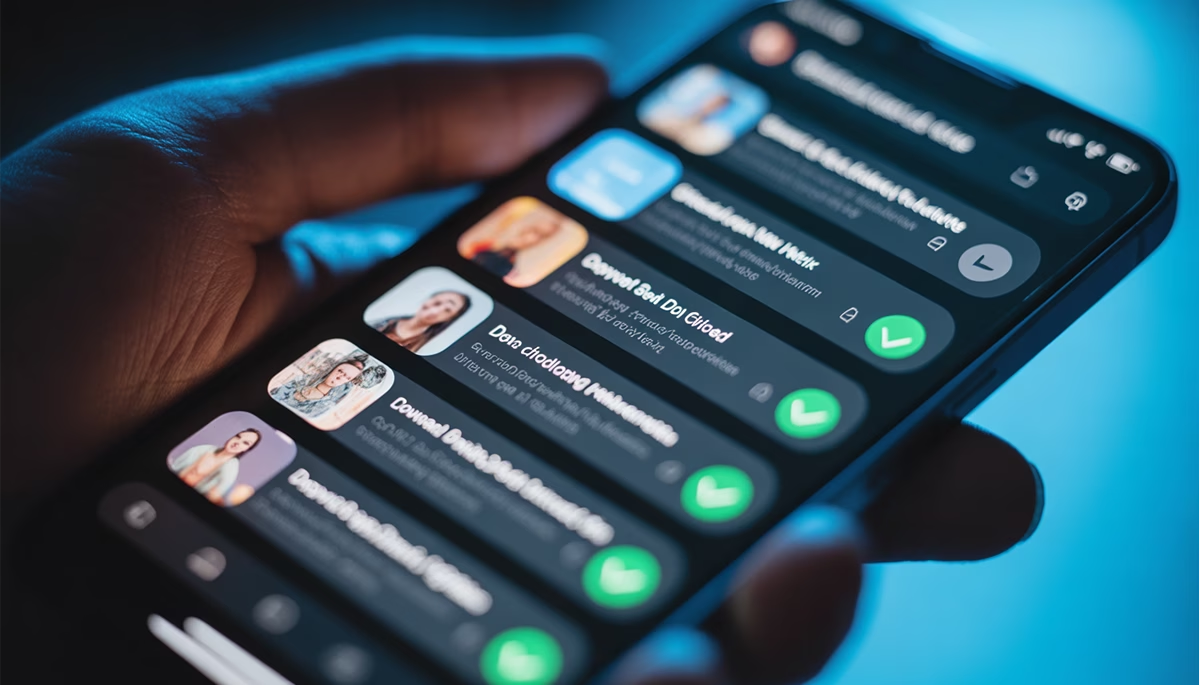
In communities hailing from India, Pakistan, Nepal, and Bangladesh, WhatsApp is the primary mode of communication. It is incredibly common to be part of dozens of large family groups, university alumni chats, and friend networks. By default, WhatsApp automatically downloads images and videos sent to these groups directly to the user’s phone gallery, even if the user never opens the chat.
Under Australian law, specifically Regulation 4A of the Customs (Prohibited Imports) Regulations 1956, it is illegal to import “objectionable goods”. This includes media that depicts explicit or highly offensive content, such as child exploitation material.
If an ABF officer finds this material on your device, even if you did not actively download it, search for it, or know it was there, they can argue that you have “imported” it without permission. This immediately enlivens the power to cancel your visa under Section 116(1)(g) of the Migration Act 1958, paired with Regulation 2.43(1)(t).
This exact technological pitfall is what sparked the legal battle in Sajjad v Minister.
The Australian immigration system is unforgiving, and the powers granted to Border Force officers at the airport are vast. They rely on the element of surprise, the exhaustion of travelers, and the fear of detention to secure quick cancellations.
On the evening of December 22, 2025, Mr. Syed Haider Sajjad arrived at Brisbane International Airport. He held a valid Subclass 485 temporary graduate visa, having lived, studied, and maintained a clean record in Australia.
While in immigration clearance, he was subjected to a search by ABF officers. This search included a forensic examination of his mobile phone. Deep within the files of his WhatsApp application, an officer located a single 1-minute and 20-second video that had been sent to a group chat on September 29, 2025. The video contained deeply objectionable, illegal material involving minors.
What followed is a textbook example of the rapid, high-pressure environment of border cancellations.
At 9:36 PM, the ABF delegate issued Mr. Sajjad a Notice of Intention to Consider Cancellation (NOICC). The delegate informed him that because this video was on his phone, he had breached customs regulations, and his visa was liable for cancellation.
He was given a mere 14 minutes to prepare before his formal interview commenced at 9:50 PM. During the interview, Mr. Sajjad provided a truthful and desperate defense:
Despite accepting that Mr. Sajjad may not have known the video was on his phone, the delegate ruled against him. The delegate stated that it is a visa holder’s responsibility to be aware of what they are carrying across the border, including the content of any electronic devices. At 11:20 PM less than two hours after the NOICC was issued his Subclass 485 visa was formally cancelled. He was transferred to immigration detention, facing a 3-year exclusion ban and immediate ruin of his Australian future.
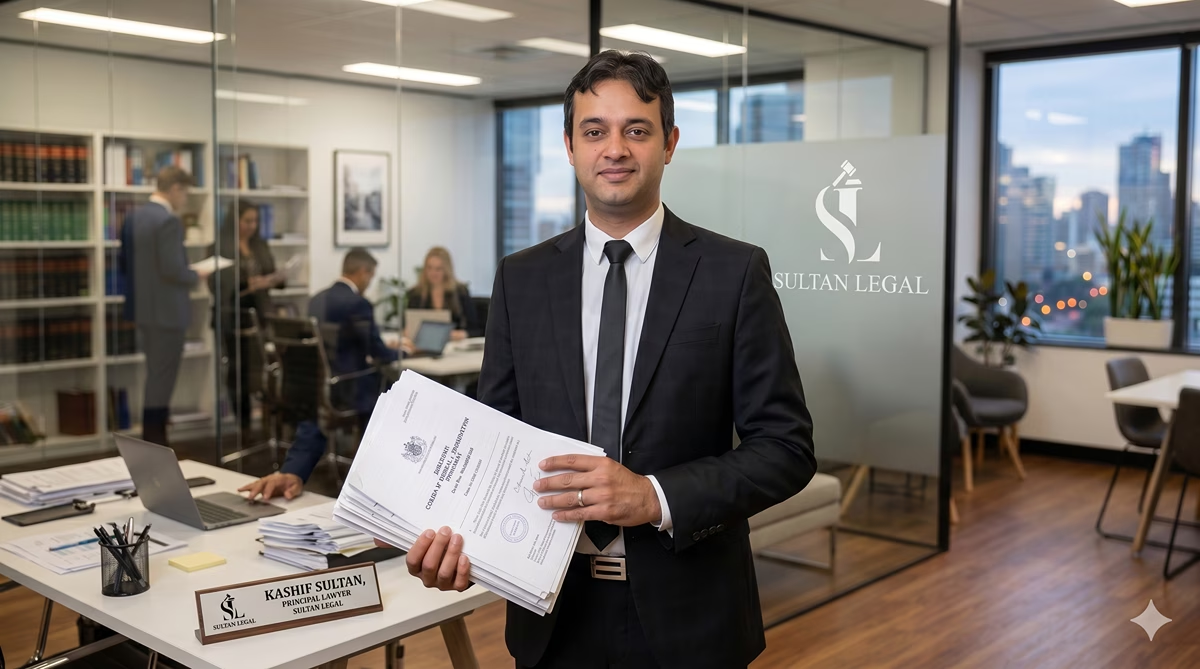
When the system moves this fast, the only way to fight back is through immediate, aggressive litigation. Mr. Sajjad engaged Kashif Sultan of Sultan Legal to challenge the decision.
The first step was securing an urgent interlocutory injunction. Sultan Legal moved swiftly to prevent the Australian government from deporting Mr. Sajjad while the case was being heard. With the deportation halted, the legal team prepared a highly technical argument focused on Jurisdictional Error.
To overturn a visa cancellation in the Federal Circuit and Family Court, you cannot simply argue that the delegate’s decision was “unfair.” You must prove that the delegate made a legal error so fundamental that they essentially failed to exercise their jurisdiction correctly.
Sultan Legal focused heavily on the reasoning the ABF delegate used to weigh the factors for and against cancellation. Departmental policy (PAM3) requires delegates to consider multiple factors, such as the purpose of the visa holder’s stay, their compliance history, and the hardship cancellation would cause.
In Mr. Sajjad’s case, the delegate acknowledged:
Yet, the delegate gave all these positive factors “a little weight,” while giving the presence of the unknown WhatsApp video “significant weight” toward cancellation.
On April 10, 2026, Judge Zipser delivered a resounding victory for Sultan Legal and Mr. Sajjad. The Court issued a writ of certiorari, officially quashing the ABF delegate’s decision to cancel the visa.
The judgment hinged on a critical legal concept: The Purpose of the Power.
Judge Zipser analyzed why the cancellation power under Section 116 exists. A primary purpose of this power is the protection of the Australian community. However, the Court highlighted severe flaws in the delegate’s logic:
No Risk to the Community: The delegate appeared to accept Mr. Sajjad was unaware of the video. The delegate appeared to accept he was not a person who watched such videos, and did not find he was careless. There was no aspect of the matter suggesting a risk to the safety, good order or health of the Australian community.
Lack of Intelligible Justification: Because there was no risk, the delegate’s decision to assign “significant weight” to the cancellation lacked an evident or intelligible justification.
Legal Unreasonableness: Citing High Court precedents like Li and Stretton, the Judge found that the delegate’s decision was legally unreasonable. The delegate failed to properly apply the statutory purpose of the cancellation power.
As Judge Zipser noted, in the absence of an evident justification for such a harsh penalty, “the result itself bespeaks error”.
This case establishes a critical precedent for temporary visa holders, particularly students and graduates under the Subclass 485 visa program.
It sends a clear message to the Department of Home Affairs: ABF delegates cannot use a “mechanical formula” to cancel visas over unknowing technological breaches without properly weighing the actual risk to the community and the catastrophic hardship inflicted on the individual.
However, while this is a massive legal victory, it does not mean ABF will stop searching phones at the airport. You must remain vigilant.
If you are travelling to Australia, you must take proactive steps to protect yourself from similar airport nightmares. Sultan Legal strongly advises all international students, workers, and permanent residents to follow these protocols:
This is the single most important step. Go to the settings of WhatsApp, Telegram, Viber, and Messenger. Disable the automatic downloading of photos, audio, and video over both Wi-Fi and Cellular networks. This ensures that if someone sends inappropriate content to a group, it does not save to your device’s hard drive unless you explicitly tap it.
Leave large, unmoderated group chats where people frequently forward memes, viral videos, or unverified content. You cannot control what others send, but you can control what groups you are a part of.
Under the Customs Act 1901, ABF officers have broad powers to examine goods at the border, including electronic devices. If an officer asks for your passcode, refusing to provide it can lead to severe penalties, device confiscation, and potentially independent grounds for visa cancellation based on character or non-compliance.
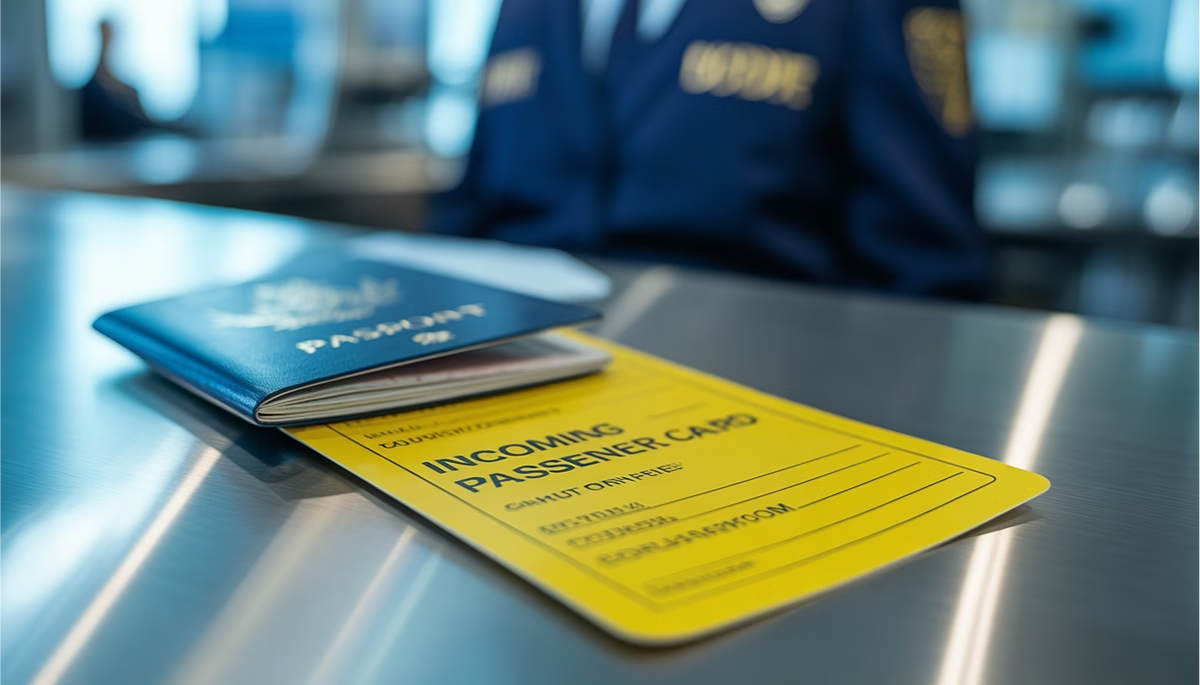
While the Sajjad v Minister case highlighted the terrifying reality of WhatsApp auto-downloads, Regulation 4A is not the only weapon the Australian Border Force (ABF) uses to execute rapid visa cancellations. The airport immigration clearance zone is a legal vacuum where temporary visa holders are highly vulnerable.
Based on our extensive experience handling urgent border visa cancellations, here are the three most common reasons international students and temporary workers have their visas stripped at the airport and exactly how you can avoid them.
For many South Asian migrants, returning to Australia after a holiday means bringing back a taste of home spices, homemade snacks, or agricultural products. Under Australia’s strict biosecurity laws, a single forgotten piece of fruit or undeclared meat product can result in immediate deportation.
The Law: Section 116(1)(e) of the Migration Act 1958 allows delegates to cancel a visa if the holder poses a risk to the “health, safety or good order of the Australian community”. Recently, the government dramatically strengthened biosecurity enforcement. If you fail to declare a prohibited item on your Incoming Passenger Card (IPC), ABF will not just fine you; they will argue you have breached biosecurity laws, cancel your visa, and ban you from returning for 3 years.
The Solution: The rule is brutally simple: Declare everything. If you are unsure if an item contains dairy, meat, or seeds, tick “Yes” on the declaration card. If you declare it, the worst that happens is the biosecurity officer throws it in the bin. If you do not declare it, you lose your visa. Never rely on the excuse, “My mother packed my bag.” In the eyes of the ABF delegate, you are solely legally responsible for your luggage.
 If an ABF officer pulls a student visa holder aside, they are actively looking for evidence that the student is not a Genuine Student. They will search your laptop, iPad, and emails for documents that contradict your visa purpose.
The Scenario: You arrive on a Subclass 500 Student Visa. The officer searches your laptop and finds an updated resume that states you are seeking “Full-Time permanent employment in Sydney.” They search your WhatsApp texts and find a message to a friend saying, “I don’t care about this college, I just need a pathway to PR.”
The Law: Under Section 116(1)(fa), a student visa can be cancelled if the Minister is satisfied that its holder “is not, or is likely not to be, a genuine student” or is engaging in conduct “not contemplated by the visa”. ABF will use your own digital footprint to prove you are using the student visa purely as a backdoor working visa.
The Solution: Your digital devices must reflect your visa status. Keep your enrollment documents, university schedules, and assignment drafts easily accessible. Ensure your communications do not casually undermine your genuine intention to study.
Student visa holders are strictly limited in the number of hours they can work per fortnight. ABF frequently uses airport phone searches to uncover historical breaches of this condition.
The Scenario: The officer checks your phone’s photo gallery and finds screenshots of timesheets or text messages to your boss negotiating shifts that clearly exceed the fortnightly cap. Even if you are not currently working those hours, historical evidence of a breach is enough to trigger a cancellation under Section 116(1)(b) for non-compliance with visa conditions.
The Solution: Strict adherence to your visa conditions is the only true defense. However, if you are confronted with allegations of working excessive hours during a border interview, do not immediately confess to complex allegations without understanding the exact legal timeframe (e.g., were the hours worked during a scheduled university break, when unlimited work is permitted?). Demand to speak with an expert immigration lawyer before signing a written statement.
If you or a loved one are facing a NOICC, have had a visa cancelled, or need advice on protecting your visa status before you travel, time is your most critical asset. Sultan Legal provides aggressive, strategic representation to protect your Australian future.
If the worst happens and your visa is cancelled at the airport, the situation is desperate, but it is not immediately over. Here is the legal reality of what follows and how Sultan Legal fights back.
Once your visa is cancelled, you become an “unlawful non-citizen” and are typically taken to an immigration transit facility or detention centre. You cannot re-enter the Australian community without a visa. Our immediate priority is applying for a Bridging Visa E (BVE). This visa does not restore your previous rights, but it can secure your release from detention while we fight your case, provided we can prove you are making arrangements to depart or pursuing a legal appeal.
A Section 116 cancellation automatically triggers Public Interest Criterion (PIC) 4013. This means you are banned from being granted most temporary visas to Australia for three years. Overturning the cancellation itself is the most effective way to eliminate this devastating ban.
If your visa was cancelled while you were physically in immigration clearance (at the airport), your rights to review at the Administrative Appeals Tribunal (AAT) are severely restricted or non-existent compared to cancellations that happen while you are living in the community.
This is why the Sajjad v Minister victory is so critical. When the AAT is not an option, the only pathway to justice is proving Jurisdictional Error in the Federal Circuit and Family Court. You need a legal team that understands how to dissect the ABF delegate’s legal reasoning, expose their failure to consider statutory purpose, and force the government to quash the decision.


There are moments in life when you require the expertise of legal professionals who genuinely care. At Sultan Legal, we adopt a compassionate approach, understanding that our clients often face challenging circumstances.
We listen to our clients to understand their legal problems, then we help our clients by tailoring solutions to their unique circumstances.
Take the first step towards resolving your legal issues. Contact Sultan Legal to schedule a consultation with our principal solicitor and the best lawyer in Sydney NSW. Reach out to our Parramatta office to learn how we can assist you.