Executor of a Will: 7 Essential Duties & Responsibilities NSW
Quick Answer: An executor of a will is responsible for administering a deceased person's estate according to their wishes. The 7 essential duties include: finding and validating the original will, arranging the funeral, confirming all assets and debts, protecting estate assets, obtaining a grant of probate from the Supreme Court, paying outstanding debts, and distributing assets to beneficiaries. The process typically takes 6-12 months and requires careful legal compliance to avoid personal liability.
Being named as an executor of a will is both an honour and a significant responsibility. You're entrusted with ensuring the deceased person's final wishes are carried out accurately and legally. However, many executors are unsure about their duties, legal obligations, and the probate process in NSW.
This comprehensive guide explains everything you need to know as an executor—from finding the original will to distributing assets to beneficiaries. Understanding these responsibilities helps you fulfill your duties properly while avoiding costly mistakes that could result in personal liability or legal disputes with beneficiaries.
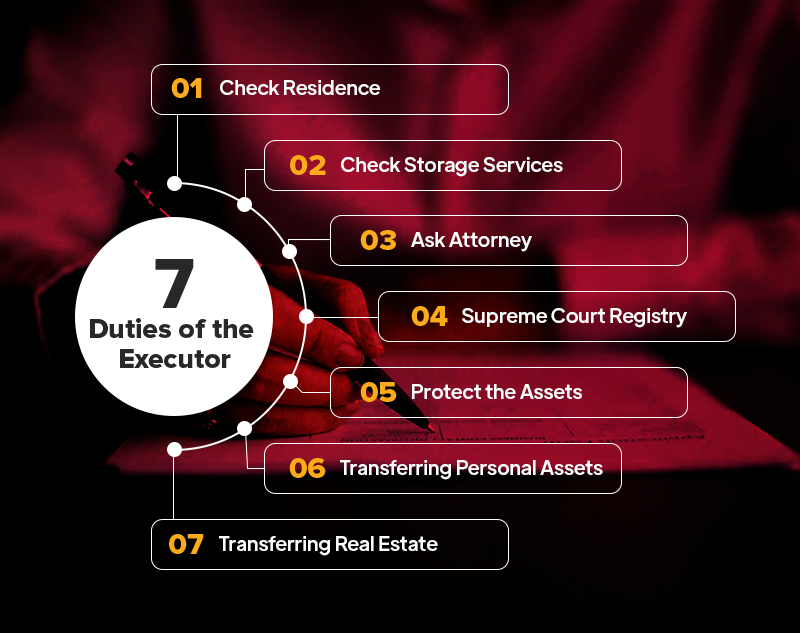
Understanding your duties as an executor ensures smooth estate administration and protects you from legal liability
What Is an Executor of a Will?
An executor is the person appointed in a will to administer the deceased person's estate. This means you're legally responsible for collecting assets, paying debts, and distributing the remaining estate to beneficiaries according to the will's instructions.
The executor acts as the personal representative of the deceased and has a fiduciary duty to act in the best interests of the estate and its beneficiaries. This role carries significant legal responsibilities and potential personal liability if duties are not performed correctly.
Key Executor Characteristics:
- Must be 18+ years old and mentally capable of managing affairs
- Named in the will by the deceased (testator)
- Not required to be a lawyer – family members often serve as executors
- Can decline the role if you're unable or unwilling to serve
- Multiple executors possible – will may appoint co-executors
The 7 Essential Duties of an Executor of a Will
Your responsibilities as an executor follow a specific legal process in NSW. Here are the seven fundamental duties you must fulfill:
Duty 1: Find the Original, Signed Will and Validate Its Authenticity
Your very first duty as executor is to locate the current, original signed will and all codicils (amendments). This process is critical because only the original will can be used for probate applications in NSW.
Four Ways to Locate an Original Will:
1. Check the Deceased's Residence
Search the deceased's home thoroughly for physical documents. Common locations include:
- Filing cabinets and home offices
- Safe deposit boxes at home
- Desk drawers and personal storage areas
- With other important documents like property deeds
2. Contact Storage Services
Reach out to banks and storage facilities to inquire about safe deposit boxes or storage units in the deceased's name. You may need to provide identification and the death certificate to gain access.
3. Ask the Deceased's Attorney
Contact any lawyer who may have prepared the will. Many solicitors retain original wills in secure storage for their clients. The lawyer can provide the original or direct you to its location.
4. Check Supreme Court Registry
While rare, some individuals register their will with the Supreme Court of NSW. Check the registry for will records in the applicable state or territory, though most people do not take this step.
Important: If you cannot locate the original will, legal complications arise. A copy may be accepted in limited circumstances, but this requires court approval and additional evidence. Seek
legal advice immediately if the original will cannot be found.
⚖️ Executor Facing Legal Challenges?
Navigating probate and estate administration can be complex. Our experienced estate lawyers in Sydney and Parramatta can guide you through each step, ensuring legal compliance and protecting you from personal liability.
📅 Book Your Executor Legal Consultation
Or call us directly: (02) 8029 0269
Duty 2: Arrange the Funeral and Obtain Death Certificate
As executor, you're typically responsible for organizing the funeral arrangements, unless someone else has been specifically designated for this task. Your responsibilities include:
- Arranging funeral or memorial services according to the deceased's wishes (if expressed in the will or elsewhere)
- Coordinating with funeral directors and selecting appropriate services
- Applying for the death certificate from the Registry of Births, Deaths and Marriages
- Paying funeral expenses from the deceased's estate
- Notifying family, friends, and relevant parties about the death
Practical Tip: Obtain multiple certified copies of the death certificate (at least 5-10 copies). You'll need these for banks, insurance companies, government agencies, and other institutions when closing accounts and transferring assets.
Duty 3: Confirm All Assets and Debts of the Estate
A thorough asset and debt search is essential for proper estate administration. You must identify and value everything the deceased owned and owed before distribution can occur.
1. Review Personal Records
- Personal papers: Bank statements, investment documents, insurance policies, property deeds, car titles
- Safe deposit boxes: Access and review contents for valuable items, documents, or additional assets
- Digital assets: Email accounts, social networks, cryptocurrency, online banking, digital photos, and domain names
2. Contact Financial Institutions
- Banks and credit unions: Obtain account statements, balances, term deposits, and loan details
- Superannuation funds: Review retirement account details and pension entitlements
- Insurance companies: Identify life insurance policies, health insurance, and vehicle insurance
- Investment firms: Gather data on shares, managed funds, and other investments
3. Review Business Records (If Applicable)
- Business ownership: Company shares, partnership interests, sole trader assets
- Business registrations: ABN, ACN, and business name registrations
- Tax returns: Review business tax returns for asset and income details
4. Check Government Records
- Property records: Land titles showing real estate holdings
- Vehicle registrations: Cars, motorcycles, boats, caravans through NSW Government services
5. External Sources
- Family and friends: Ask for information about assets or debts they know about
- Estate planning lawyer: Consult for legal guidance and asset identification assistance
- Accountant: Engage for asset valuation and tax return preparation
- Creditors: Inform creditors of the death and provide details about estate administration
Note: It's essential to consider the jurisdiction's legal requirements and specific guidelines provided by relevant authorities. Failing to identify all assets and debts can result in personal liability for the executor.
Duty 4: Protect the Estate Assets
As executor, you have a fiduciary duty to safeguard the deceased's assets until they're distributed to rightful beneficiaries. Failing to protect assets properly can result in personal liability if assets are lost, stolen, or devalued.
Key Asset Protection Strategies:
- Create a comprehensive inventory listing all assets and liabilities including:
- Real estate properties
- Bank accounts and investments
- Personal belongings and valuable items
- Vehicles and equipment
- Debts, credit card balances, loans, and mortgages
- Obtain professional valuations for significant assets like property, jewelry, art, and collectibles to determine fair market value
- Secure valuable items in safe locations such as bank safe deposit boxes or secure storage facilities
- Maintain insurance coverage on properties, vehicles, and valuable assets during estate administration
- Update security measures including changing locks on properties and updating passwords for online accounts to prevent unauthorized access
- Continue mortgage and loan payments to prevent foreclosure or repossession
- Pay property rates, utilities, and maintenance to maintain asset value
Example: If the deceased owned a rental property, you must continue collecting rent, paying the mortgage, maintaining insurance, and handling necessary repairs. Failing to maintain the property could reduce its value and expose you to liability claims from beneficiaries.
Duty 5: Obtain a Grant of Probate
Probate is the legal process of proving the validity of a will and obtaining court authority to administer the estate. In NSW, a grant of probate is issued by the Supreme Court and gives you legal authority to deal with the deceased's assets.
What Is Probate?
Probate is official court approval that:
- Validates the will and confirms it as the deceased's final testament
- Confirms your appointment as the rightful executor
- Authorizes you to distribute the deceased's estate according to the will
Without probate, you cannot legally transfer or sell assets in the deceased's name. Banks, financial institutions, and land registry offices require probate before releasing assets or transferring ownership.
When Is Probate Necessary?
- Assets solely in deceased's name: Property, bank accounts, shares, and investments owned individually typically require probate
- Estate value threshold: While there's no strict threshold in NSW, institutions generally require probate for estates valued over $50,000-$100,000
- Real estate: Property transfers almost always require probate
When Probate Might NOT Be Required:
- Jointly owned assets: Property and bank accounts owned jointly with right of survivorship automatically pass to the surviving owner
- Small estates: If the total estate value is below institutional thresholds and contains no real estate
- Nominated beneficiaries: Superannuation and life insurance with valid binding death benefit nominations
Steps to Apply for Probate in NSW:
Step 1: Collect Required Documents
- Original will and any codicils
- Death certificate
- Asset and liability statements
- Inventory of estate
- Identity documents for executor
Step 2: Publish Probate Notice
Place a notice of intention to apply for probate on the NSW Supreme Court website. This alerts creditors and interested parties that you're applying for probate.
Step 3: Mandatory Waiting Period
Wait 14 days after publishing the notice before filing your probate application. This gives creditors time to come forward.
Step 4: Submit Application
File your probate application with the Supreme Court of NSW, including all supporting documents and paying the required filing fee.
Step 5: Respond to Court Inquiries
Address any questions or requests for additional information from the court promptly to avoid delays.
Probate Costs and Timeframes:
- Filing fees: Depend on estate value – current fees range from approximately $1,000 to $5,000+
- Processing time: Typically 4-8 weeks for straightforward applications without complications
- Late applications: Applications submitted more than 6 months after death must include a reason for the delay
Professional Advice: It's advisable to seek legal advice from
probate solicitors or family lawyers, as specific requirements may vary based on your circumstances. Complex estates, disputes among beneficiaries, or missing documentation require expert legal guidance.
📋 Need Help with Probate Applications?
Probate applications can be complex and time-consuming. Our experienced estate lawyers handle the entire process for you, ensuring accurate documentation and timely Supreme Court approval.
📅 Book Your Probate Consultation Today
Or call us directly: (02) 8029 0269
Duty 6: Pay All Outstanding Debts and Taxes
Once the Supreme Court grants probate, you can proceed with paying the deceased's outstanding debts and finalizing their tax obligations. This must be completed before distributing assets to beneficiaries.
Common Debts and Obligations:
- Credit card debts and personal loans
- Mortgage and secured loans on property
- Utility bills including electricity, gas, water, phone, internet
- Medical expenses and hospital bills
- Funeral costs (if not already paid)
- Income tax for the current financial year up to date of death
- Capital gains tax on asset disposals
- Legal and professional fees for estate administration
Critical Warning: If you need to sell estate assets to pay debts, ensure you achieve fair market value. Selling below market value can expose you to legal action from beneficiaries claiming compensation for the shortfall. Obtain professional valuations and market the assets appropriately.
After ensuring all legitimate debts are cleared, the estate can then be distributed among the rightful beneficiaries according to the will's terms.
Duty 7: Distribute Assets to Beneficiaries
The final duty is transferring assets to beneficiaries as specified in the will. NSW law provides specific timeframes and procedures you must follow to protect yourself from liability.
Distribution Timing Requirements
Important NSW Law Requirement: Under NSW law, executors should not distribute an estate earlier than:
- 6 months after the date of death, AND
- 30 days after publishing a 'Notice of Intention to Distribute'
This waiting period protects you from potential claims by unknown creditors or family provision claims under the Succession Act 2006 (NSW).
Distributing Personal Property
Personal belongings can be designated in three ways:
- Part of the total estate: Included in overall estate value for equal division
- Specific gifts: Individual items left to named beneficiaries (e.g., "my gold watch to my son")
- Residuary estate: All remaining assets after specific gifts and debts are handled
Every properly drafted will includes a residuary clause specifying who receives the remaining assets after specific gifts. Without this clause, residuary assets are distributed according to intestacy laws.
Transferring Real Estate
Real estate includes residential homes, land, commercial properties, and industrial properties. Special rules apply:
- Mortgaged property: Cannot be transferred unless the mortgage is paid off or refinanced by the beneficiary
- Co-owned property: When property is jointly owned, the surviving co-owner automatically acquires full ownership (joint tenancy with right of survivorship)
- Sole ownership: If the deceased was the sole owner, probate is necessary to transfer the property
- Land registry procedures: Property transfers require proper documentation lodged with NSW Land Registry Services
Example: If the will leaves a property to two children equally, you must either sell the property and distribute proceeds, or transfer the property title to both children as co-owners (tenants in common). The beneficiaries' preferences and the will's specific terms determine the approach.
Rights and Protections for Executors
While executors have significant responsibilities, NSW law also provides certain rights and protections:
Right to Compensation
Executors are entitled to reasonable compensation for their time and effort, typically:
- Professional executors: Usually 1-6% of estate value depending on complexity
- Family executors: Can claim compensation but many waive this right
- Reasonable out-of-pocket expenses: Travel, postage, professional fees paid on behalf of the estate
Right to Decline
Being named as executor doesn't legally obligate you to accept the role. You can decline by:
- Renouncing your appointment before obtaining probate
- Appointing an alternate executor if one is named in the will
- Having beneficiaries apply for Letters of Administration if no alternate exists
Legal Protection
If you act honestly, reasonably, and in good faith, you're generally protected from personal liability for estate administration decisions. However, negligence, fraud, or breach of fiduciary duty can result in personal consequences.
Common Executor Mistakes to Avoid
Costly Mistakes That Create Liability:
- Distributing assets too early: Before the 6-month waiting period or before all debts are paid
- Failing to identify all creditors: Missing legitimate debts that surface later
- Poor record keeping: Not maintaining detailed records of all transactions and decisions
- Self-dealing: Benefiting personally from estate assets or transactions
- Selling assets below market value: Without proper valuations or competitive marketing
- Missing tax obligations: Failing to file required tax returns or pay estate taxes
- Poor communication: Not keeping beneficiaries informed about estate administration progress
- Acting without probate: Attempting to transfer assets before obtaining grant of probate
What If There Are Disputes?
Estate disputes are unfortunately common. As executor, you may face:
- Will challenges: Beneficiaries or excluded parties contesting the will's validity
- Family provision claims: Eligible persons claiming inadequate provision under Succession Act 2006 (NSW)
- Beneficiary disagreements: Disputes over asset distribution, valuations, or will interpretation
- Executor removal applications: Beneficiaries seeking your removal due to alleged mismanagement
In these situations, seek immediate legal advice from estate dispute lawyers. Attempting to resolve complex disputes without legal guidance can expose you to personal liability.
⚖️ Expert Estate Administration & Probate Legal Services
Being an executor involves complex legal responsibilities and potential personal liability. Sultan Legal's experienced estate lawyers guide executors through every step—from probate applications to asset distribution—ensuring legal compliance and protecting you from future claims. Whether you're facing estate disputes, probate challenges, or simply need guidance on your duties, we provide practical, expert advice tailored to your situation.
📅 Book Your Estate Administration Consultation Now
📞 Call: (02) 8029 0269
Frequently Asked Questions
What are the rights of an executor?
Executors have two main rights: the right to reasonable compensation for their time and effort in administering the estate, and the right to decline the executorship role if they're unable or unwilling to serve. Executors are also entitled to reimbursement for reasonable out-of-pocket expenses incurred during estate administration, including legal fees, valuation costs, and travel expenses necessary for fulfilling their duties.
Are wills public records in Australia?
Yes, wills generally become public records in Australia once lodged with the Supreme Court for probate. After probate is granted, the will becomes accessible to the public through court records. However, if the executor has not lodged the will for probate (for example, if probate isn't required for a small estate), beneficiaries may need to contact the executor directly to obtain a copy of the will.
What if the executor is dead or missing?
If multiple executors were appointed and one is deceased or missing, another named executor can apply for probate and administer the estate. If all appointed executors are unavailable (deceased, missing, or unwilling to act), a beneficiary or interested party can apply to the court for "Letters of Administration with the Will Annexed" to be appointed as the estate's administrator with the same powers as an executor.
Do all wills go through probate in Australia?
No, not all wills require probate in Australia. Small estates with no real property and minimal assets may not need to go through the formal probate process. Additionally, jointly owned assets that pass automatically to the surviving owner, and assets with nominated beneficiaries (like superannuation with binding death benefit nominations) typically don't require probate for transfer.
Can an executor of a will be a beneficiary in Australia?
Yes, it's very common and legally permissible for executors to also be beneficiaries. This is especially typical in cases where spouses appoint each other as executors and primary beneficiaries, or where adult children serve as executors and also inherit from the estate. However, executors must still act impartially and in accordance with the will's terms, avoiding any conflict of interest or breach of fiduciary duty.
How long does the probate process take in NSW?
Straightforward probate applications in NSW typically take 4-8 weeks from submission to receiving the grant of probate from the Supreme Court. However, complex estates, disputes among beneficiaries, missing documentation, or court backlogs can extend this timeframe to several months. The entire estate administration process from death to final distribution usually takes 6-12 months, though complex estates may take longer.
Can an executor sell property before probate is granted?
No, in NSW you generally cannot sell or transfer property before obtaining probate. Banks, land registry services, and other institutions require probate before releasing assets or transferring ownership. Attempting to sell property without proper legal authority can result in invalid transactions and personal liability. In urgent situations, you may apply for expedited probate processing.
What happens if the executor doesn't fulfill their duties?
If an executor fails to properly fulfill their duties, beneficiaries can apply to the Supreme Court to have the executor removed and replaced. The executor may also face personal liability for losses to the estate resulting from their negligence, breach of fiduciary duty, or misconduct. In serious cases involving fraud or intentional misappropriation, criminal charges may apply.
Can beneficiaries challenge executor decisions?
Yes, beneficiaries can challenge executor decisions they believe are improper, unfair, or in breach of fiduciary duty. Common challenges include disputes over asset valuations, sale prices, distribution timing, or alleged self-dealing by the executor. Beneficiaries can apply to the Supreme Court for orders requiring the executor to provide detailed accounts, reverse improper transactions, or for the executor's removal if serious misconduct is proven.
Do I need a lawyer to be an executor?
While you're not legally required to hire a lawyer, it's highly advisable for most estates. Estate administration involves complex legal requirements, potential personal liability, and strict compliance obligations. Professional legal advice helps you avoid costly mistakes, ensures proper probate procedures, and protects you from future claims. For complex estates, disputes, or situations involving business assets or international property, professional legal assistance is essential.
Legal Disclaimer: This article provides general information about executor duties and the probate process in NSW. It should not be considered legal advice or relied upon for specific estate administration decisions. Every estate has unique circumstances, and legal requirements can vary based on the will's terms, estate complexity, and family situations. Individual outcomes depend on specific facts, documentary evidence, and proper legal procedures. Professional consultation is required to assess your particular circumstances and ensure compliance with all legal obligations. Sultan Legal makes no warranties about the accuracy, completeness, or currency of this information. We accept no liability for decisions made based on this content without obtaining proper legal advice tailored to your specific situation.