The person applying for a Domestic Violence Order (DVO) or Apprehended Violence Order (AVO), or applying to vary an existing order, must present compelling evidence to prove that the order is justified. The evidence should highlight that the accused or respondent has engaged in domestic violence toward the applicant and that the DVO is necessary and suitable for their protection.
Moreover, to decrease the emotional distress experienced by victims, the Family Law Act 1975 and Domestic Violence Crime and Victims Act 2004 (NSW) grant the status of special or protected witnesses to domestic violence sufferers in criminal trials. This provides crucial protections during court proceedings.
At Sultan Legal, our experienced AVO lawyers in Parramatta help clients gather, organize, and present evidence for successful DVO and AVO applications across New South Wales.
Yes, evidence is absolutely essential for a successful DVO application in Australia. One of the key legal requirements to apply for a domestic violence order is to back up your allegations with credible evidence. Without proper evidence, courts may dismiss your application, leaving you without legal protection.
The court needs to be satisfied that:
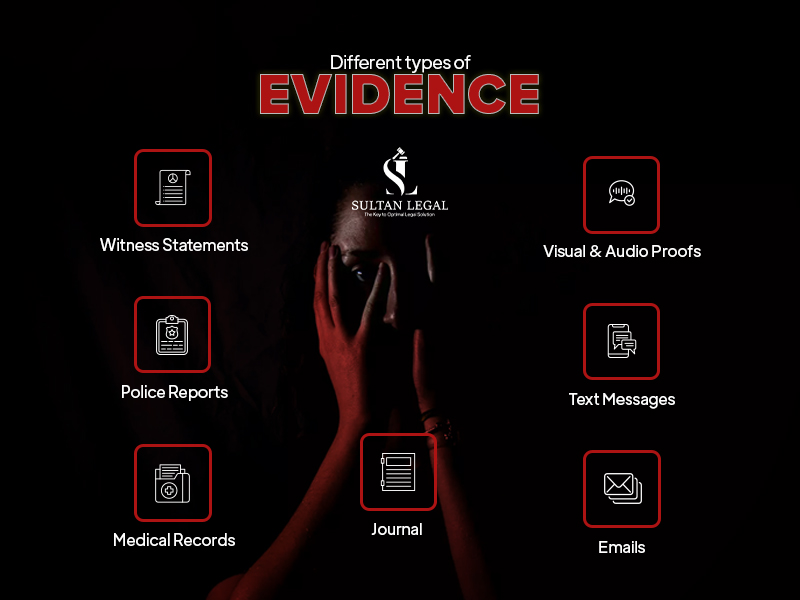
When someone experiencing physical violence wants to apply for a DVO, they are required to show any of the following evidence for DVO application in Australia:
Pictures showing bruises, marks, cuts, burns, or other physical injuries caused by violence are powerful evidence. When taking photos:
Accounts from friends, neighbors, medical professionals, or relatives who:
Financial abuse is a form of domestic violence where one partner controls the other's access to economic resources. To demonstrate financial control for evidence for DVO application in Australia, you may need to provide evidence that:
Important note: If you are able to access and withdraw funds from a joint account freely, then simply having the joint account does not indicate financial control. The key is demonstrating restrictions, coercion, or control over your financial independence.
Emotional abuse can occur in different forms and is often the most difficult type of domestic violence to prove because it leaves no physical marks. However, courts recognize emotional abuse as serious domestic violence under Australian law.
1. Keep a Detailed Journal
Document all instances of emotional abuse with:
2. Obtain Professional Assessments
Consider consulting with mental health professionals for evaluation reports:
3. Collect Digital Evidence
4. Obtain Witness Statements
Use sworn affidavits from friends, family, or colleagues who have:
Our experienced criminal and family lawyers guide you through evidence collection and DVO application processes. We ensure your application is comprehensive and legally sound.
Book Free DVO ConsultationOr call: (02) 8029 0269
Witnesses can provide important statements as evidence to support your claims against the abuser. They can recount their own observations of abusive behavior and its effects on you. The credibility of witnesses is important to strengthen your case.
Credible witnesses may include:
Witness statements should be detailed, specific, and include dates, times, and descriptions of what they observed or were told. Sworn affidavits carry more weight than informal statements.
Police reports can be valuable evidence for DVO application in Australia, especially if NSW Police have been called to the scene multiple times. These reports document incidents, injuries, and witness statements.
Police evidence includes:
Medical evidence serves multiple critical purposes in DVO applications:
Medical evidence can be obtained from:
Visual proof of abuse, like pictures of injuries, videos of violence, or voice recordings of the abuser, can be very helpful in backing up a DVO request. These offer solid evidence of the physical harm or threatening behavior caused by the abuser.
Acceptable visual and audio evidence:
Other forms of evidence that can be used to support your DVO request include:
A detailed journal documenting specific dates, times, and locations of abuse is powerful evidence, especially for emotional abuse or establishing patterns of behavior.
Your journal should include:
Keep your journal in a safe place where the abuser cannot find it. Consider keeping a digital backup in secure cloud storage.
If you want to seek legal help and apply for a DVO, follow these essential steps:
Contact experienced criminal lawyers or family lawyers who specialize in domestic violence matters. They will help you:
At Sultan Legal, we offer confidential consultations to assess your situation and provide clear guidance on the best path forward.
Gather and organize all evidence systematically:
Organize evidence chronologically to show patterns of escalating violence. Create copies of everything and store originals safely.
Consider reporting the abuse to law enforcement. They can:
You can report to police even if incidents occurred in the past. Historical reports still create valuable evidence.
Your lawyer can help you complete and file your application with the NSW Local Court. The application will include:
You'll need to attend a court hearing where the magistrate will consider your application. Having legal representation significantly increases your chances of success. Your lawyer will:
Don't navigate the DVO process alone. Our experienced lawyers ensure your evidence is comprehensive, properly presented, and maximizes your chances of obtaining protection.
Book Your Free ConsultationConfidential legal support: (02) 8029 0269
Under the Family Law Act 1975, domestic violence victims receive special protected witness status in criminal trials. This helps reduce emotional distress by providing:
Even if there's no history of violence in police records, other forms of evidence can still substantiate your claim for a DVO. Courts understand that domestic violence often goes unreported. Your application can succeed based on:
Lack of criminal history does not prevent you from obtaining a DVO if you can demonstrate domestic violence has occurred.
Police reports are valuable evidence because they document domestic violence incidents, injuries, property damage, and witness accounts at the time events occurred. They're created by neutral third parties (police officers) and carry significant weight with courts. Multiple police reports demonstrate a pattern of abusive behavior over time. Even if no criminal charges were laid, police reports still provide strong supporting evidence for your DVO application. Courts recognize that police documentation is objective and contemporaneous, making it highly credible evidence.
For financial abuse, gather evidence showing restricted access to bank accounts, control over your income, or coercion regarding financial decisions. Document all instances where you're prevented from working or accessing money. For emotional abuse, keep a detailed journal of incidents including dates, times, specific quotes, and emotional impact. Consult with psychologists or counselors for professional evaluations documenting psychological harm. Obtain witness statements from people who've observed the abuse or its effects. Save all threatening or controlling messages. Seek legal advice immediately to explore protection order options and ensure your evidence is properly documented.
First, seek legal advice from experienced criminal or family lawyers to understand the process and requirements. Second, systematically collect all relevant evidence including medical records, witness statements, photos, text messages, police reports, and your personal journal. Third, report the abuse to police if you haven't already — they can create official reports and may apply for a Police AVO on your behalf. Fourth, work with your lawyer to complete the DVO application form accurately. Finally, attend the court hearing where your lawyer will present your evidence and argue for appropriate protective conditions. Professional legal representation significantly increases your chances of success.
This status significantly reduces emotional distress for domestic violence victims during criminal trials by providing crucial protections. Protected witnesses can testify via video link without being in the same room as their abuser, have a support person present while giving evidence, use screens to avoid seeing the accused, request closed court proceedings excluding the public, and benefit from special questioning procedures limiting aggressive cross-examination. These protections acknowledge the trauma and intimidation victims experience and help ensure they can provide testimony without additional psychological harm. Your lawyer can request these protections when you're required to testify.
Lack of police records doesn't prevent you from obtaining a DVO. Courts understand domestic violence is often unreported. You can still substantiate your claim with medical reports documenting injuries, personal testimony describing the abuse in detail, witness statements from friends or family who observed the violence or its effects, text messages or emails showing threats or controlling behavior, psychological evaluations documenting emotional harm, and your detailed personal journal. Many successful DVO applications involve first-time reporting where no prior police history exists. The strength of your current evidence matters more than historical criminal records.
Yes, in NSW you can legally record conversations you're part of without the other person's knowledge or consent. This means you can record threatening phone calls, abusive arguments, or verbal admissions. However, you cannot record private conversations between other people without their consent — that constitutes illegal surveillance. Audio recordings showing threats, admissions of violence, or abusive language provide powerful evidence for DVO applications. Save original recordings securely and make backup copies. Consult your lawyer about the admissibility of recordings in your specific case, as technical or authenticity issues may affect whether recordings are accepted as evidence.
Your journal should be extremely detailed to provide credible, compelling evidence. Include the exact date and time of each incident, specific location where abuse occurred, detailed description of what happened (who said/did what), exact quotes if possible, your emotional response (fear, anxiety, humiliation), physical symptoms experienced (panic attacks, sleeplessness), witnesses present, and any actions you took (called police, sought medical help, told friends). Write entries as soon as possible after incidents while details are fresh. Courts value contemporaneous records. Keep your journal safe where the abuser cannot find it. Consider digital backups in secure cloud storage.
While you can technically apply for a DVO yourself, having legal representation significantly increases your chances of success. Lawyers ensure your application is complete, properly documented, and strategically presented. They help you gather the right evidence, complete court forms correctly, understand legal requirements, present your case effectively at hearings, and cross-examine the respondent. Without legal expertise, you may miss crucial evidence, make procedural errors, or fail to articulate why the DVO is necessary. At Sultan Legal, we offer free initial consultations to assess your case and explain how we can help. Legal representation is particularly important if the respondent has their own lawyer.
Gathering and presenting evidence for a DVO application is complex and requires strategic legal expertise. Our experienced Parramatta lawyers specialize in domestic violence protection orders and have helped hundreds of clients obtain the legal protection they need. We guide you through evidence collection, ensure your documentation is comprehensive and properly formatted, represent you at court hearings, and maximize your chances of obtaining a strong, enforceable protection order. Don't face this process alone. Your safety and legal protection are our priority.
📅 Book Free DVO Evidence ConsultationConfidential legal support: (02) 8029 0269
Legal Disclaimer: Information provided is general in nature and should not be relied upon as legal advice. DVO applications require assessment of individual circumstances and proper legal guidance. Evidence requirements vary depending on the type of abuse and specific case facts. Professional consultation is essential to ensure your application meets all legal requirements. All legal services are provided in accordance with Australian legal practice requirements and professional conduct rules.
🡒 Related criminal and family law services: